“Newfoundland Adventure”, June 29 – July 5

Newfoundland is an amazing place at any time of year, but early summer just might take the cake. It certainly did this year! Starting at the end of June, I was fortunate to join another great group of visitors from all over the world for their “Newfoundland Adventure” with Wildland Tours. Here are just a few photo highlights of the many, many things we enjoyed!

Here is our Wildland Tours group at Tickle Cove, Bonavista Bay. What a great bunch!!

Here is our Wildland Tours group at Tickle Cove, Bonavista Bay. What a great bunch!!

Our tour began & ended in North America' oldest city. There's never a lack of things to do in St. John's.

Our tour began & ended in North America’ oldest city. There’s never a lack of things to do in St. John’s.

The whales had arrived en masse in the days before our tour, and they entertained us from day one when we visited Witless Bay Ecological Reserve with O'Brien's Tours.

The whales had arrived en masse in the days before our tour, and they entertained us from day one when we visited Witless Bay Ecological Reserve with O’Brien’s Tours.

Humpbacks_June30_2668

Berry season was still weeks away, but the blossoms were a good sign. These blueberry flowers were at Blackhead.

Berry season was still weeks away, but the blossoms were a good sign. These blueberry flowers were at Blackhead.

This nealy iconic photo of St. John's narrows, an iceberg and a humpback whale was taken from Cape Spear, North America's easternmost point.

This nealy iconic photo of St. John’s narrows, an iceberg and a humpback whale was taken from Cape Spear, North America’s easternmost point.

A pair of Willow Ptarmigan graced us by crossing the road near Newfoundland's southernmost lighthouse, Cape Pine.

A pair of Willow Ptarmigan graced us by crossing the road near Newfoundland’s southernmost lighthouse, Cape Pine.

Cape Pine also produced our first Short-tailed Swallowtails of the trip ... they were plentiful at most headlands during the week.

Cape Pine also produced our first Short-tailed Swallowtails of the trip … they were plentiful at most headlands during the week.

Whales were part of the action every day - like this one at St. Vincent's which was breaching and waving.

Whales were part of the action every day – like this one at St. Vincent’s which was breaching and waving.

No visit to Newfoundland is complete without a visit to Cape St. Mary's. Despite some heavy fog (which, to be honest, is part of the experience there!) we enjoyed amazing views of the Northern Gannet colony.

No visit to Newfoundland is complete without a visit to Cape St. Mary’s. Despite some heavy fog (which, to be honest, is part of the experience there!) we enjoyed amazing views of the Northern Gannet colony.

Our group also enjoyed a zodiac tour of Bonavista Bay with Sea of Whale Adventures ...

Our group also enjoyed a zodiac tour of Bonavista Bay with Sea of Whale Adventures …

... and, of course, icebergs were one of the main attractions.

… and, of course, icebergs were one of the main attractions.

The tour ended in the scenic community of King's Cove.

The tour ended in the scenic community of King’s Cove.

A short hike around King's Cove (while the rest of the group enjoyed the zodiac ride!) included a very confiding Spotted Sandpiper

A short hike around King’s Cove (while the rest of the group enjoyed the zodiac ride!) included a very confiding Spotted Sandpiper.

As well as some confiding dragonflies like this Forcipate Emerald (a new one for me) ...

As well as some confiding dragonflies like this Forcipate Emerald (a new one for me) …

and this Four-spotted Skimmer.

and this Four-spotted Skimmer.

We took advantage of the sunny afternoon to hike the Skerwink Trail. Incredible scenery ...

We took advantage of the sunny afternoon to hike the Skerwink Trail.

Incredible scenery ...

Incredible scenery …

whales ...

whales …

and another stunning iceberg.

and another stunning iceberg.

We also encountered our first caplin of the trip -- masses of them spawning and rolling on a beach as we watched from a cliff high above.

We also encountered our first capelin of the trip — masses of them spawning and rolling on a beach as we watched from a cliff high above.

We also enjoyed a visit to Elliston, where the Atlantic Puffins can be enjoyed comfortably from land.

We also enjoyed a visit to Elliston, where the Atlantic Puffins can be enjoyed comfortably from land.

This Mustard White was at Elliston was a bit of a surprise for me ... I see them so rarely in eastern Newfoundland, though they may be more common than I realize in other areas.

This Mustard White was at Elliston was a bit of a surprise for me … I see them so rarely in eastern Newfoundland, though they may be more common than I realize in other areas.

These Beach-head Irises were blooming in many locations. Here, the town of Elliston lingers in the background.

These Beach-head Irises were blooming in many locations. Here, the town of Elliston lingers in the background.

Northern Blue butterflies were abundant at the tip of the Bonavista Peninsula ... I spent a fair bit of time chasing them around the barrens trying to catch a decent photo!

Northern Blue butterflies were abundant at the tip of the Bonavista Peninsula … I spent a fair bit of time chasing them around the barrens trying in vain to catch a decent photo!

Food is a big part of any tour, and this one didn't disappoint. This delicious mooseburger (complete with partridgeberry ketchup and homemade chips) was a popular choice at the Bonavista Social Club.

Food is a big part of any tour, and this one didn’t disappoint. This delicious mooseburger (complete with partridgeberry ketchup and homemade chips) was a popular choice at the Bonavista Social Club.

Another brilliant iceberg was grounded just off the scenic little outport of Red Cliff, Bonavista Bay.

Another brilliant iceberg was grounded just off the scenic little outport of Red Cliff, Bonavista Bay.

The sea arch at nearby Tickle Cove is always a beautiful sight, but especially when you can spot a massive iceberg through it!

The sea arch at nearby Tickle Cove is always a beautiful sight, but especially so when you can spot a massive iceberg through it!

A shot of Tickle Cove with an iris in the foreground.

A shot of Tickle Cove with an iris in the foreground.

Beach Pea is another lovely but often overlooked flower that blossoms on our beaches.

Beach Pea is another lovely but often overlooked flower that blossoms on our beaches.

We ended the week with a wonderful day back in St. John's.

We ended the week with a wonderful day back in St. John’s.

Our final day of the tour began with a boat tour out of St. John's harbour ... passing the iconic Battery along the way.

Our final day of the tour began with a boat tour … passing the iconic Battery along the way.

Not surprisingly, the highlight was getting up close and personal with more icebergs. Here we could see St. John's in the distance between two bergs.

Not surprisingly, the highlight was getting up close and personal with more icebergs. Here we could see St. John’s in the distance between two bergs.

Icebergs_StJohns_3826 Iceberg_StJohns_3886bw

A view of St. John's harbour as we entered the narrows.

A view of St. John’s harbour as we entered the narrows.

We also hiked from Signal Hill to the qualit Quidi Vidi village, stopping to enjoy some Bald Eagle chicks along the way.

We also hiked from Signal Hill to the quaint Quidi Vidi village, stopping to enjoy some Bald Eagle chicks along the way.

Our last stop was Middle Cove Beach, just north of the city ...

Our last stop was Middle Cove Beach, just north of the city …

...where we found a small run of capelin "rolling" on the beach.

…where we found a small run of capelin “rolling” on the beach.

Capelin require coarse sandy beaches in order to spawn ... huge schools "roll" in with the tide, with the females depositing as many as 50,000 eggs each!

Capelin require coarse sandy beaches in order to spawn … huge schools “roll” in with the tide, with the females depositing as many as 50,000 eggs each!

Caplin_MCVJuly5_4141It was another awesome week, filled with lots of fun, beautiful weather, and all the trimmings of a real Newfoundland adventure! Icebergs, whales, seabirds, moose, excellent food … and a great group of people to share it with. Thanks to everyone for joining me on this Wildland Tours excursion. I’m looking forward to leading another one in August!

Bergs, birds, whales & history …

June has been a hectic month … hence the lack of blog updates. I have been busy leading a number of tours – private bookings and for folks like Wildland Tours and Eagle Eye Tours/Adventure Canada. The excursions have ranged from one to seven days and involved birds, bergs, whales, and even a little history! It’s nice to be making use of more than just my birding knowledge for a change!

I begin yet another week-long tour in just a few hours, so no time for a detailed post — but here are some photo highlights from the past few weeks. It has been fun!!

Icebergs have been everywhere this spring - including one we enjoyed right alongside the huge seabird colonies of Witless Bay Ecological Reserve (Wildland Tours/Adventure Canada/O'Briens Boat Tours)

Icebergs have been everywhere this spring – including one we enjoyed right alongside the huge seabird colonies of Witless Bay Ecological Reserve (Wildland Tours/Adventure Canada/O’Briens Boat Tours)

The massive colonies of Common Murre in Witless Bay Ecological Reserve are always awe-inspiring! (Wildland Tours/Adventure Canada/O'Brien's Boat Tours)

The massive colonies of Common Murre in Witless Bay Ecological Reserve are always awe-inspiring!

COMUflock_WBERJune12_0829 GreenIsland_WBERJune12_0887

Atlantic Puffin, Witless Bay Ecological Reserve (Wildland Tours/Adventure Canada/O'Brien's Boat Tours)

Atlantic Puffin, Witless Bay Ecological Reserve

Common Murre, Witless Bay Ecological Reserve (Wildland Tours/Adventure Canada/O'Brien's Boat Tours)

Common Murre, Witless Bay Ecological Reserve

Razorbills, Witless Bay Ecological Reserve (Wildland Tours/Adventure Canada/O'Brien's Boat Tours)

Razorbills, Witless Bay Ecological Reserve

Cape Pine is the southernmost point of land in Newfoundland ...

Cape Pine is the southernmost point of land in Newfoundland …

STSwallowtail_June17_1216

… and an excellent place to see Short-tailed Swallowtail, which has a very restricted range and is more or less an island specialty.

Nearby St. Shott's is the island's southernmost community, and beautifully rugged. (Wildland Tours)

Nearby St. Shott’s is the island’s southernmost community, and beautifully rugged.

Following on this theme, North America's southernmost herd of Woodland Caribou can often be seen in this area, too.

Following on this theme, North America’s southernmost herd of Woodland Caribou can often be seen in this area, too. These ones were near Sam’s River.

Arctic Tern have been nesting on the bach at St. Vincent's for a number of years now, allowing for unusually close encounters with these often shy birds.

Arctic Tern have been nesting on the bach at St. Vincent’s for a number of years now, allowing for unusually close encounters with these often shy birds.

ARTE_June17_1261

Castle Hill provides not only a great look at an important part of Newfoundland's history, but also a fantastic view over Placentia, which was once the "French capital" of our island.

Castle Hill provides not only a great look at an important part of Newfoundland’s history, but also a fantastic view over Placentia, which was once the “French capital” of our island.

We enjoyed a visit by a pair of inquisitive Gray Jays while visiting Castle Hill.

We enjoyed a visit by a pair of inquisitive Gray Jays while visiting Castle Hill.

I enjoyed some stunning evening light and scenery at the beautiful boat harbour in St. Bride's ...

I enjoyed some stunning evening light and scenery at the beautiful boat harbour in St. Bride’s …

... some of it a sad reminder of the struggle that these communities have had to face since the closure of the cod fishery.

… some of it a sad reminder of the struggle that these communities have had to face since the closure of the cod fishery.

Retired_1347

The sunset at St. Bride's was amazing.

The sunset at St. Bride’s was amazing.

Sunset_StBrides_1419Sunset_StBrides_June17_1334

Cape St. Mary's and its Northern Gannets are always a crowd pleaser - and all my groups had fantastic days there, with or without the fog!

Cape St. Mary’s and its Northern Gannets are always a crowd pleaser – and all my groups had fantastic days there, with or without the fog!

NOGA_June18_1547 NOGAimm_June18_1544

The icebergs in Bonavista & Trinity Bays were incredible - in number, size and sheer beauty. Some dramatic skies added to the scene at times.

The icebergs in Bonavista & Trinity Bays were incredible – in number, size and sheer beauty. Some dramatic skies added to the scene at times.

Icebergs_June19_1736

Sometimes, a whale or two even got in the way of the iceberg viewing  ;)

Sometimes, a whale or two even got in the way of the iceberg viewing 😉

A visit to historic Trinity was also a highlight.

A visit to historic Trinity was also a highlight.

Trinity_1686

Our tour of "Cape Random" (near New Bonaventure) was fun, and included yet another iceberg right in the cove.

Our tour of “Cape Random” (near New Bonaventure) was fun, and included yet another iceberg right in the cove.

CapeRandom_1855 CapeRandom_1857 CapeRandom_1863CapeRandom_1894

ATPUelliston_June20_1979

We also enjoyed a short visit with the Atlantic Puffins at Elliston, where the colony can be viewed comfortably from land.

ATPUelliston_June20_2057

A boat tour out of St. John's harbour give a new perspective on Cape Spear, North America's easternmost point - this time with a rainstorm brewing in the background.

A boat tour out of St. John’s harbour gives a new perspective on Cape Spear, North America’s easternmost point – this time with a rainstorm brewing in the background.

And, of course, more icebergs. There were some mammoths outside the narrows this month!

And, of course, more icebergs. There were some mammoths outside the narrows this month!

Humpback Whales have been showing up in the past two weeks, following the capelin inshore. I expect to see a lot more of them this week!

Humpback Whales have been showing up in the past two weeks, following the capelin inshore. I expect to see a lot more of them this week!

Off the Rock: Hawaii (Part 2: Big Island, cont’d)

You can read Part 1 of our recent Hawaiian birding adventure here.

BIG ISLAND (March 12-17)

After two busy days of birding and setting up shop, Jody Allair and I greeted our Eagle Eye tour group on the evening of Wednesday, March 12. Our crew for the next eleven days consisted of a dozen wonderful people from Ontario, British Columbia, Washington, Michigan, and Japan.

A view of Hakalau Forest, with a large Ohia Lehua looming in the foreground.

A view of Hakalau Forest, with a large ohia lehua looming in the foreground.

March 13

Our exploration of Hawaii kicked off the next morning with a visit to one of Big Island’s most special and protected places – Hakalau Forest National Wildlife Refuge on the eastern (windward) slopes of Mauna Kea. The ancient Hawaiian name Hakalau means “many perches”, reflecting its importance both as bird habitat and in their traditional culture. Since the refuge area is managed and protected by the U.S. Fish & Wildlife Service, we visited with Hawaii Forest & Trail – a great local company with exclusive rights to bring tours into this and wonderful place. Our guide for the day was Gary Dean, who is not only intimately familiar with the birds of Hakalau, but also Canadian transplant!

Our first bird stop along the Saddle Road gave us great looks as several Chukar – another introduced game bird that has become well established in the area. A short while later, we were thrilled with excellent views of Pueo (Short-eared Owl) which is native and thought to have colonized the islands after the arrival of the Polynesians. After flying around for a minute or two, this beautiful owl perched right alongside the road to give us incredible views! The rest of the drive offered roadside views of other great birds such as Pacific Golden Plover, Erckel’s Francolin, and Ring-necked & Kalij Pheasants.

The Pueo is a native subspecies of Short-eared Owl. This one posed for looks on the eastern slopes of Mauna Kea.

The Pueo is a native subspecies of Short-eared Owl and has a special place in traditional Polynesian culture and stories. This one posed for looks on the eastern slopes of Mauna Kea.

The Omao is one of only two native thrushes left in Hawaii. It is usually difficult to see, giving itself away only by its beautiful song. (This one was photographed on the Puu Oo trail.)

The Omao is one of only two native thrushes left in Hawaii. It is usually difficult to see, giving itself away only by its beautiful song. (This banded individual was photographed on the Puu Oo trail.)

I was immediately struck by the lushness of Hakalau Forest as we pulled into the parking area … the hillsides were vibrant with stands of ohia, koa and other large trees. While this forest is home to one of the most intact native forests in Hawaii, it didn’t take long to spot introduced and alien plants lurking in the understory – due mainly to the area’s history as a large pastureland. Fortunately, the predominate bird species in this area were also native, with impressive numbers of Iiwi, Apapane and Hawaii Amakihi calling and foraging throughout our hike. We were extremely fortunate with great views of several Omao – one of just two native thrushes left in Hawaii. Introduced songbirds were relatively scarce in this forest, with just a handful of Japanese White-Eye, Red-billed Leiothrix and House Finch being seen during our several hour walk.

Hakalau Forest is also home to some of the rarest plants in the world, and we were fortunate to see several of them, such as the very endangered lobelias Shipman’s Cyanea (Cyanea shipmanii) and Hillside Clermontia (Clermontia lindseyana). We also encountered several of Hawaii’s intriguing “mintless” mint plants, which evolved to suit their formerly safe island ecosystem.

'Ohi wai (Clermontia pyrularia) is one of several very rare and endangered lobelia species in Hawaii. Their unique flower shapes have evolved along with the long-billed honeycreepers, many of whose own recent extinction have spelled doom for the plants which relied on them for pollination. Nature can be at once amazing and sadly vulnerable.

Haha/Shipman’s Cyanea (Cyanea shipmanii) is one of several very rare and endangered lobelia species in Hawaii. Their unique flower shapes have evolved along with the long-billed honeycreepers, many of whose own recent extinction have spelled doom for the plants which relied on them for pollination. Nature can be at once amazing and sadly vulnerable.

Several species of mint in Hawaii have evolved without the characteristic mint flavour/aroma since it offered no survivial advantage in the absence of native herbivores. This has since proven to be a deadly adaptation, with introduced animals like feral pigs having decimated many populations.

Giant mint (Phyllostogia brevidens) is a very rare endemic plant that is extinct in the wild, occurring now only where replanted. Several species of mint in Hawaii have evolved without the characteristic mint flavour/aroma since it offered no survivial advantage in the absence of native herbivores. This has since proven to be a deadly adaptation, with introduced animals like feral pigs having decimated many populations.

Despite the poor photos, we had quite good looks at this otherwise skulky Hawaiian Creeper. One of the dullest honeycreepers, it is designed to be secretive.

Despite the poor photos, we had quite good looks at this otherwise skulky Hawaiian Creeper. One of the dullest honeycreepers, it is designed to be secretive.

Our key bird targets for this day included two rare honeycreepers that are restricted to these native old-growth forests. We scored our first early on – a very skulky Hawaiian Creeper foraging quietly along the hidden inner branches of a koa tree. Incredibly, we ended up seeing or hearing a total of five including two attending a nest – possibly one of the rarest observations of the entire tour!! We soon nailed our second target species, although it was a little less cooperative … an Akepa was seen feeding high up in the canopy of an ohia tree, often hiding amongst the leaves and against the bright sunlight. Another was seen by just a few members of the group, and a third was heard singing. Two I’o (Hawaiian Hawk) circled over our picnic spot, while several Hawaii Elepaio (“volcano” race) were found frolicking from branch to branch in their typical style. All in all, it was awesome birding and a fantastic day in one of Hawaii’s most pristine forests!

A beautiful, birdy hike through Hakalau Forest made for an awesome first day of our Hawaiian adventure.

A beautiful, birdy hike through Hakalau Forest made for an awesome first day of our Hawaiian adventure.

March 14

With one fantastic day and several amazing birds already under our belt, we headed back to Mauna Kea the following morning (March 14) – this time to the drier western slopes and the home of another very rare honeycreeper. The mamane-naio forest of Puu La’au is one of the best places to see Palila – a critically endangered species that feeds almost entirely on the green seed pods of mamane trees. We were very fortunate to have one of the birds, the last remaining “grosbeak honeycreeper” of Hawaii, fly across the road in front of our vans on the drive up. It landed right alongside the road, allowing almost the entire group some very good looks before it disappeared a few minutes later. We continued up to an elevation of ~7500′ where Jody and I had seen a pair just two days prior, hoping for even more. Unable to see or hear any after a 20 minute stroll, we were headed back to the vehicles when one of our participants picked up on one flying in … and suddenly there were four!! Although they were never close enough for great photos, they did obligingly sit still long enough for everyone to get wonderful scope views. Seeing five of these incredibly threatened birds was awesome – and a highlight that would be hard to beat.

The Palila is one of the most endangered birds in Hawaii, with its entire population living in an area on the western slopes of Mauna Kea that can be seen in one panoramic view from the Saddle Road. All the other "grosbeak honeycreepers" have already become extinct.

The Palila is one of the most endangered birds in Hawaii, with its entire population living in an area on the western slopes of Mauna Kea that can be seen in one panoramic view from the Saddle Road. All the other “grosbeak honeycreepers” of Hawaii have already become extinct.

The forests on the western slopes of Mauna Kea are relatively dry and predominated by native mamane, naio and the now endangered sandalwood trees.

The forests on the western slopes of Mauna Kea are relatively dry and predominated by native mamane, naio and endangered sandalwood trees.

These mamane-naio forests host one of the densest populations of Amakihi in Hawaii, and their nasal calls were a constant reminder of that. The pale, frosty “Mauna Kea” race of Hawaii Elepaio also lives here. We were lucky enough not only to see a pair of this classy little bird but also found a nest they were building high up in a naio tree. Several Wild Turkeys were seen and heard during the morning, and two California Quail frolicked on the roadside during our drive down. Skylarks were plentiful in the area, entertaining us with their fluty song and peppy display flights.

Apapane are perhaps the most common and widespread honeycreeper in Hawaii. These energetic, brilliant red birds occur on all the main islands.

Apapane are perhaps the most common and widespread honeycreeper in Hawaii. These energetic, brilliant red birds occur on all the main islands.

After lunch at nearby Mauna Kea State Park, part of our group hiked the Puu Oo trail in hopes of seeing another very rare honeycreeper, Akiapola’au. While they were unable to track down this hard-to-find bird, they did enjoy great looks at Iiwi, Apapane, Hawaii Amakihi, Hawaii Elepaio, and even two obliging Omao. A Red-billed Leothrix, common but often hard to see, also showed up for the party. Other members of the group who did not feel like hiking the rough trail terrain explored the roadsides near Kipuka 21 – another very birdy location that is unfortunately closed to the public. We enjoyed several flocks of Yellow-fronted Canary, dozens of Apapane and a probable Metallic Skink that slinked away before being confirmed.  A rainy drive back along the Saddle Road produced a Pueo (Short-eared Owl), several Erckel’s Francolin, and an increasingly rare Japanese Quail that graced our lead vehicle (Jody, not me!!) by flying across the road.

Saffron Finches, introduced from South America, add some extra colour to the Kona scenery.

Saffron Finches, introduced from South America, add some extra colour to the Kona scenery.

March 15

Our last morning in the Kona region was a little more relaxed, starting (for me at least) with a little poking around near the hotel. I especially enjoyed the Golddust Day Geckos and Green Anoles hanging out on trees and plants along the path, but also the stunning little Saffron Finches feeding in the grass. Zebra and Spotted Doves were just about everywhere, while Common Myna, Japanese White-Eyes and the occasional Java Sparrow or Yellow-billed Cardinal brightened up the scenery.

–

Each morning, smart-looking Golddust Day Geckos could be found sunning themselves on large leaves near our hotel.

Each morning, smart-looking Golddust Day Geckos could be found sunning themselves on large leaves near our hotel.

While Green Anoles actually occur in several colours, I liked these "typically" green ones best.

While Green Anoles actually occur in several colours, I liked these “typically” green ones best.

We checked a small water drip at a local mall where songbirds often stop to drink & bathe, finding little activity outside House Sparrows and several Common Waxbills.

Gray Francolin were found skulking in the underbrush along the trail at Honokohau Bay.

Gray Francolin were found skulking in the underbrush along the trail at Honokohau Bay.

From there we headed to Honokohau Bay, where the short trail to the beach produced great looks at two Gray Francolin, several Pacific Golden Plover and a Mongoose. Butterflies included Cabbage White, Large Orange Suplhur, Monarch, and Gulf Fritillary. Along the shoreline we enjoyed a handful of Wandering Tattlers, Ruddy Turnstones, and a single Sanderling. Several Green Sea Turtles were lounging in the tidal pools or on the exposed lava rock along the beach.

Wandering Tattlers are among the most common shorebirds in Hawaii - but still quite exciting for an east coaster like me!

Wandering Tattlers are among the most common shorebirds in Hawaii – but still quite exciting for an east coaster like me!

At Aimikapa Pond were several endemic Hawaiian Coots (Alae Ke’oke’o), Black-crowned Night Heron, and introduced Cattle Egret, along with migrant waterfowl including Northern Shoveler, Ring-necked Duck, and Green-winged Teal. Two Hawaiian Stilts were seen foraging on the far edge of the pond and large Milkfish (introduced from the Philippines) lurked in the water in front of us, their dorsal fins breaking the surface like small sharks.

Hawaiian Coots, like this one at Aimikapa Pond, are now considered an endemic species - split from its American counterpart. Most have a fully white frontal shield, although a minority exhibit a red shield.

Hawaiian Coots, like this one at Aimikapa Pond, are now considered an endemic species – split from its American counterpart. Most have a fully white frontal shield, although a minority exhibit a red shield.

It was time to make our first big move of the tour, driving south along the coast to our next location near Hawaii Volcanoes National Park. Along the way, we stopped for lunch at Manuka State Park, where our third race (“Kona”) of Hawaii Elepaio came out to greet us not far from the picnic area. Japanese White-Eye, Apapane, and Hawaii Amakihi fluttered around the treetops as we ate, along with a nice example of “yellow” House Finch. Our next stop at Whittington State Park was also quite birdy, with numerous Saffron Finch and a big flock of Nutmeg Mannikin hanging out near the parking area. The highlight, however, was a distant group of Hawaiian (Black) Noddy feeding over the rough ocean waters. We arrived at our beautiful lodgings in Volcano in time to settle in and head out for a much deserved meal.

The tree fern forests of Hawaii Volcanoes National Park had a "jurassic" vibe.

The tree fern forests of Hawaii Volcanoes National Park had a very “Jurassic Park” vibe.

March 16

We started our day at Hawaii Volcanoes National Park with a visit to the famous Thurston Lava Tube – along, snaking cave that once (several hundred years ago) had red hot lava flowing through it. The lush tree fern forest surrounding the cave was alive with birds, especially Apapane which were feeding on red ohia blossoms. We were also fortunate to have an Omao fly in and land alongside the trail just metres away, stopping just long enough for us to revel in its beautiful song. Since we had arrived early and beat the usual “tourist” traffic, we were able to enjoy a quiet stroll through these very prehistoric feeling forests before heading off to our next destination.

Our excellent Eagle Eye Tours group at the entrance to the Thurston Lava Tube.

Our excellent Eagle Eye Tours group at the entrance to the Thurston Lava Tube.

HVNP_LavaFlow_3823Heading south along the Chain of Craters Road, we drove through a series of dry, grassy forests interspersed on otherwise black, barren lava fields. It was amazing to see the vast lava flows and to imagine the eruptions that must have produced them – beautiful, frightening, creative and destructive all at the same time. Quick stops along the road allowed us to explore the fields and see both types of lava up close – the rough, jagged “a’a” and the smoother, pillow-like “pahoehoe“. However, we soon discovered that the extremely high winds of the morning had forced a road closure, preventing us from reaching our ultimate destination at the Holei Sea Arch. The winds didn’t stop us from enjoying the view, though, as we walked down to a nearby viewpoint, braced ourselves against the railing, and gazed in awe over the stunning volcanic coastline.

The stark but beautiful coastline on the Chain of Craters Road shows how various lava flows, over many years, met the ocean.

The stark but beautiful coastline on the Chain of Craters Road shows how various lava flows, over many years, met the ocean.

Kalij Pheasant (male)

Kalij Pheasant (male)

We continued back along the road and visited the Jaggar Museum, which overlooks the Kilauea Caldera. We took in great views as the caldera steamed away, and even managed to spot our first White-tailed Tropicbird cruising around the edge of the crater (where, incredibly, a few even nest!). We also visited the nearby Visitors Centre, where Kalij Pheasants strutted around in full view.

Kilauea Caldera - an active crater where lava continuously bubbles a few hundred feet below the rim.

Kilauea Caldera – an active crater where lava continuously bubbles a few hundred feet below the rim.

Erckel's Francolin, introduced from Africa, are common throughout the Big Island, Kauai and parts of Oahu.

Erckel’s Francolin, introduced from Africa, are common throughout the Big Island, Kauai and parts of Oahu.

Our lunch, at a lush green picnic spot on the Mauna Loa Road, proved to be another highlight of the day. We were entertained by three very friendly Erckel’s Francolin that have clearly become accustomed to people (and their food!), as well as numerous Hawaii Amakihi and Apapane hanging out in the nearby trees. Two new butterflies were also spotted – a Long-tailed Blue (aka Pea Blue) and a female Fiery Skipper. However, the best butterfly of the entire trip were discovered during our afternoon hike on the Bird Park (Kipuka Puaulu) trail, where we encountered several Kamehameha Butterflies – one of two endemic butterflies, and definitely the most flashy. I hung back to try for better photos, only to spot the other endemic butterfly – Blackburn’s Little Blue! The trail was also quite birdy, getting most of the group their first good looks at a secretive Red-billed Leiothrix.

Kamehameha_HVNP_3948

Kamehameha Butterfly

Kamehameha Butterfly is one of two endemic butterflies in Hawaii, and by far the most flashy looking. Unfortunately these individuals did not cooperate for upperwing photos.

Kamehameha Butterfly is one of two endemic butterflies in Hawaii, and by far the most flashy looking. Unfortunately these individuals did not cooperate for upperwing photos.

Hawaii has two endemic butterflies, the smallest and most understated of which is Blackburn's Little Blue. Note the irridescent green underwings - a distinguishing mark from several other species of blue that have been introduced.

Blackburn’s Little Blue is the other, more understated of Hawaii’s two endemic butterflies. Note the irridescent green underwings – a distinguishing mark from several other species of blue that have been introduced.

After a lovely evening meal in Volcano, we headed back to Kilauea Caldera to see the glow of lava emanating from the crater. It was pretty amazing sight, made even better by an owl soaring around the rim.

KilaueauCrater_Night_4007smMarch 17

We did a little morning birding around the beautiful property and neighbourhood of our accommodations in Volcano, seeing lots of Apapane, House Finches, and a few Northern Cardinals. We also heard our first Hwamei (Melodious Laughing Thrush) of the trip, though in typical fashion it failed to materialize from its forested haunts.

The rest of our day was taken up with travel, as we caught our flights to Kauai – the second island in our Hawaiian adventure. We did manage to sneak in a little birding during a stopover in Honolulu, hanging out in the airport’s Japanese garden where we saw our first Red-vented and Red-whiskered Bulbuls (including a brand new fledgling of the latter).

Off the Rock: Hawaii (Part 1: Big Island)

Follow these links to read subsequent installments of our recent Eagle Eye Tours adventure in Hawaii:

—

As mentioned in an earlier blog post, I was recently asked to co-lead an Eagle Eye Tours birding trip to Hawaii. After much anticipation, reading and training my tongue to perform the acrobatics necessary to pronounce Hawaiian bird names – the time (March 10-25) has come and gone. It was an absolutely amazing experience, with lots of great birds, incredible scenery and a wonderful group of people. I was privileged to co-lead the trip with Jody Allair, who not only shares my sense of wonderment with all things natural but is an awesome birder with lots of experience birding the beautiful islands of Hawaii.

In a nutshell, the tour took our group to three islands – Big Island (Hawaii), Kauai and Oahu over 12 days. At the end of the tour, Jody and I headed over to Maui for a little extra birding before heading home. Every island was a totally different experience in terms of scenery, birding & birds — and each one equally incredible. Over the next couple weeks, I will try to summarize our trip over several blog posts. Here’s the first installment:

BIG ISLAND (Pre-tour: March 10-12)

After a long day of traveling nearly halfway around the globe, Jody and I arrived in Kona late on the evening of Monday, March 10. With the tour not slated to started for another two days, this gave us time to sort out some details, do a little scouting and (most importantly) squeeze in some extra birding. We started in first thing Tuesday morning by picking up the van and heading “mauka” (inland towards the volcanoes) and up in elevation. We had an amazing day and scored some  very hot birds (including some of the world’s rarest).

A view of Hawaii's highest peak, Mauna Kea, poking up above the clouds - taken from our airplane.

A view of Hawaii’s highest peak, Mauna Kea, poking up above the clouds – taken from our airplane.

The edge a kipuka visited by the Puu Oo trail, where the old growth forest meets the barren lava flow.

The edge of a kipuka visited by the Puu Oo trail, where the old growth forest meets the barren lava flow.

Our first stop was the Puu Oo trail, which at ~5700′ elevation winds across lava fields on the SE slopes of Mauna Kea (one of the largest but dormant volcanoes of Hawaii). Importantly, the trail visits several kipukas (islands of old growth forest spared between the otherwise barren lava flows) which are home to a number of endemic bird species. Our big target was Akiapola’au which has been a nemesis for Jody, eluding him on his previous visits. Often described as having one of the most amazing bills in the world, this spunky honeycreeper uses its stout lower mandible like a woodpecker to drill holes and flake bark, and then its long, curved upper mandible to probe out insects and larvae from within. It is also a very threatened species, occurring only on Big Island and (like many endemic forest birds of the Hawaiian Islands) in select sections of high elevation forest.

A view of Mauna Kea, taken from the Puu Oo trail. This is a fabulour hike through some very interesting landscapes, not to mention some very hot birding!

A view of Mauna Kea, taken from the Puu Oo trail. This is a fabulous hike through some very interesting landscapes, not to mention some very hot birding!

With dogged focus, we ignored the Apapane and Iiwi calling around us and headed straight for the first large stand of Koa about a mile in. Hopeful (but not over-confident!), we slowly worked our way through the trees, scanning and listening for the family group that had been spotted here several times in recent weeks. About fifteen minutes later, I heard Jody calling out to me with obvious excitement in his voice. Not only had he finally found an Akiapola’au, but it was a beautiful adult male. Amazingly, the bird honoured us by hanging out for almost an hour, going about its business using that incredible bill, and sometimes feeding just metres above or in front of us! It was a fantastic experience and a perfect way to start our two weeks in Hawaii!!

This male Akiapola'au, one of Big Island's rarest and most special birds, graced us for almost an hour. Check out that crazy bill!!

This male Akiapola’au, one of Big Island’s rarest and most special birds, graced us for almost an hour. Check out that crazy bill!!

The Elepaio, an energetic little monarch flycatcher, occurs on three of the Hawaiian Islands, where each has been split into separate species. Here on Big Island, the Hawaii Elepaio even has three distinct races - this once being considered the "volcano" race.

The Elepaio, an energetic little monarch flycatcher, occurs on three of the Hawaiian Islands, where each has been split into separate species. Here on Big Island, the Hawaii Elepaio has three distinct races – this once being of the “volcano” race.

We continued our hike further along the Puu Oo trail, visiting two other kipuka and trekking over rugged, barren patches of ‘a’a lava (the rougher of the two forms of lava fields). The hike produced great looks at several other endemic species like Hawaii Elepaio, Hawaii Amakihi, and even the more secretive Omao which is one of only two species of Hawaiian thrush that have so far escaped extinction. It is very sad to think that these birds were once far more widespread on the island and are now struggling for existence in these small patches of sanctuary; almost waiting for climate change and the rising “avian malaria line” to push them even closer to the brink. We also saw two I’o (Hawaiian Hawks) soaring high over the vast lava flows, and encountered our first of two endemic butterflies – the unassuming Blackburn’s Little Blue. And of course there were several introduced bird species, including the ever-present Japanese White-Eye and the lovely Red-billed Leiothrix.

Two Hawaiian Hawks (an endemic species) soared high above us on the Puu Oo trail ... not exactly stunning photo opportunities, but great birds!

Two Hawaiian Hawks (an endemic species) soared high above us on the Puu Oo trail … not exactly stunning photo opportunities, but great birds!

Hawaii has two endemic butterflies, the smallest and most understated of which is Blackburn's Little Blue. Note the irridescent green underwings - a distinguishing mark from several other species of blue that have been introduced.

Hawaii has two endemic butterflies, the smallest and most understated of which is Blackburn’s Little Blue. Note the irridescent green underwings – a distinguishing mark from several other species of blue that have been introduced.

It seems strange to see California Quail in Hawaii, yet they are well established an now one of the more abundant game birds of the island's forests.

It seems strange to see California Quail in Hawaii, yet they are well established and now one of the more abundant game birds of the island’s forests.

Later in the afternoon we headed to the mamane-naio forests, which grow high up on the drier slopes of Mauna Kea. Here, our main target would be Palila – another very rare/ critically endangered species and the last remaining “grosbeak honeycreeper” in all of Hawaii. From one point in the road we could see the entire range of this species on one section of the volcano slope. It is scary that one fire or small eruption could wipe that species off the face of the earth. Driving slowly up the road, we saw several California Quail (one of a several game birds that were long ago introduced to the Hawaiian Islands), several yellow House Finches that required second looks, and a frosty white “Mauna Kea” race of Hawaii Elepaio.

Palila feed primarily on the flowers and seed pods of Mamane trees, tying them to this unique ecological niche on the western slopes of Mauna Kea.

Palila feed primarily on the flowers and seed pods of Mamane (above) and Naio trees, tying them to this unique ecological niche on the western slopes of Mauna Kea.

We stopped near a location where several Palila had been reported in recent weeks, walking quietly along the road listening for their whistled calls. Plenty of Hawaii Amakihi were calling and zipping around, but no sign of our targets. We both commented that the mamane trees in the area didn’t appear to have many blossoms, so we trotted a bit further uphill where we could see more of the yellow pea-like flowers. Sure enough, Jody’s keen ear picked up some whistles which we followed off the road and further uphill. Soon we spotted two Palila feeding in the distant treetops. Moments later they lifted off and flew … straight towards us! They landed nearby and continued to feast on the mamane seed pods for which their big, finch-like bills have specially evolved Despite the foggy conditions and lack of photographic opportunities (see some distant ones in my next post), they gave us great looks for about two minutes before heading back over the hill and out of sight. Awesome birds!!

Hawaii Amakihi are one of the more numerous honeycreepers on Big Island. Like their cousins, they are very enigmatic and rarely pose for photos.

Hawaii Amakihi are one of the more numerous honeycreepers on Big Island. Like their cousins, they are very enigmatic and rarely pose for photos.

We headed back down the mountain to the beautiful seaside town of Kona, celebrating our fantastic day with seafood and a couple beer. Still one more day before the tour starts, and with our two big targets down we decided to spend it doing some light birding around Kona and sorting out some details for the coming week.

I woke the next morning to the sound of House Finches, Japanese White-Eyes, and Zebra Doves singing outside our hotel window. From the balcony I enjoyed my first looks at Java Sparrow, as well as a dastardly Mongoose lurking in the garden shadows. This predatory animal was introduced from Asia in the late 19th century and has since wreaked havoc on many native species – preying on small birds, killing chicks of larger species, and stealing eggs from nests. It is one of just many introduced species (animal and plant) that have ravaged the natural ecology of he Hawaiian islands.

Java Sparrows are common in the Kona area, with this one hanging out around the gardens and lawns of our hotel.

Java Sparrows are common in the Kona area, with this one hanging out around the gardens and lawns of our hotel.

After breakfast, Jody and I headed to a local mall – not to shop, but to bird the surrounding fields and a water drip that attract a variety of songbirds. Although we didn’t find any of the Estrilda finches we had expected, we did find two Yellow-billed Cardinals, a Nutmeg Mannakin, and a few Yellow-fronted Canaries among the more common birds. Several Monarch, Large Orange Sulphur and Cabbage White Butterflies flitted around in the fields.

Green Sea Turtles are widespread in tropical and subtropical seas of the world. Many of the Pacific population visit the shoals and beaches of Hawaii, often hauling out to enjoy the sun. Not unlike many of the tourists who also visit here!

Green Sea Turtles are widespread in tropical and subtropical seas of the world. Many of the Pacific population visit the shoals and beaches of Hawaii, often hauling out to enjoy the sun. Not unlike many of the tourists who also visit here!

Our next stop was to bird the beaches of Honokohau Bay and the small freshwater Aimikapa Pond. Here we encountered our first Wandering Tattlers, Ruddy Turnstones and Sanderling of the trip, along with a number of Pacific Golden Plovers (which are common throughout Hawaii in many different habitats!). There were also at least six Green Sea Turtles milling about in the shallow waters or lounging on the beach – very fun to see, even if they don’t do much! One large one enjoying the sun allowed some good photo opportunities, and with my telephoto lens I was able to give it lots of space when doing so (an important thing to do, though many people approach far too close). In the pond we saw several Black-crowned Night Heron (native) and dozens of Cattle Egret (introduced), the endemic Hawaiian Coot (Alae Ke’oke’o) along with a group of migrant waterfowl that included Northern Shoveler, Lesser Scaup, Ring-necked Duck, and Green-winged Teal.

GreenSeaTurtle_3292For the afternoon, we changed pace (and medium!) by heading to a south Kona beach for some snorkeling in a shallow coral reef. It was my first introduction to snorkeling, and a totally awesome experience! Dozens of tropical fish swam unperturbed around us, including several Reef Triggerfish (Humuhumunukunukuapua’a; Hawaii’s official state fish and the longest word in the language!), Moorish Idol, Yellow Tang, Cornetfish, Parrotfish, and several species of Butterflyfish. Even a couple Green Sea Turtles got in on the action, one swimming right alongside for me a minute or so.

And thus ended our first 48 hours in Hawaii – and my first blog post about it. But lots of adventures left … so stay tuned for the next installment in a few days!

Koa trees, like these on the Puu Oo trail, are an important native tree on the Hawaiian islands. They are not only part of important ecological niches for threatened species like Akiapoloa'au and Hawaii Creeper, but it is also used in a lot of local woodcraft due to its beautiful grain.

Koa trees, like these on the Puu Oo trail, are an important native tree on the Hawaiian islands. They are not only part of important ecological niches for threatened species like Akiapoloa’au and Hawaii Creeper, but it is also used in a lot of local woodcraft due to its beautiful grain.

At many of Kona's beaches, like this on in Honokohau harbour, the traces of black volcanic sand can be seen mixed in with lighter sand.

At many of Kona’s beaches, like this on in Honokohau harbour, the traces of black volcanic sand can be seen mixed in with lighter sand.

Common Myna is another common, introduced species of the Hawaiian Islands. They can be seen just about anywhere, but I like this photo of one walking around on the lava as it meets the sea at Honokohau harbour, Kona.

Common Myna is another common, introduced species of the Hawaiian Islands. They can be seen just about anywhere, but I like this photo of one walking around on the lava as it meets the sea at Honokohau harbour, Kona.

Black-crowned Night Herons (Auku'u) are native to Hawaii, having colonized the islands before people.

Black-crowned Night Herons (Auku’u) are native to Hawaii, having colonized the islands before people.

Yellow-legged Gull & Other Gems of Winter at Quidi Vidi

Quidi Vidi lake, in eastern St. John’s, is the hub of local birding activity during winter (if not all year). The resident ducks are joined by many others as ponds & rivers around the city freeze up, and the small areas of open water at Quidi Vidi can provide great looks and photo opportunities with a a variety of interesting birds. Regular species there include Northern Pintail, Greater & Lesser Scaup, & Tufted Duck, among others. This winter they have been joined by more uncommon birds like a drake Wood Duck and a pair of Ring-necked Ducks. Very unusual have been as many as five Common Mergansers visiting the lake the past two weeks, providing great, close views that are very atypical for this normally wary species.

Ring-necked Ducks breed in Newfoundland, but are rarely easy to photograph. This drake has been hanging out in the relatively small patches of open water at Quidi Vidi since early February. - Photo: Jared Clarke (February 22. 2014)

Ring-necked Ducks breed in Newfoundland, but are rarely easy to photograph. This drake has been hanging out in the relatively small patches of open water at Quidi Vidi since early February.
– Photo: Jared Clarke (February 22. 2014)

Since this morning was the first chance I had to visit Quidi Vidi for several weeks, I was happy to find the mergansers, Ring-necked Ducks and the other divers hanging out there and providing some excellent photo opportunities.

Photo opportunities with Common Mergansers are few and far between ,since they usually stick to larger patches of open water and are very wary. A small group making regular visits to Quidi Vidi have been becoming more tolerant of people and allowing some great looks. - Photo: Jared Clarke (February 22. 2014)

Photo opportunities with Common Mergansers are few and far between ,since they usually stick to larger patches of open water and are very wary. A small group making regular visits to Quidi Vidi have been becoming more tolerant of people and allowing some great looks.
– Photo: Jared Clarke (February 22. 2014)

But my main reason for visiting this morning was to look for the adult Yellow-legged Gull which has been so elusive all winter. It has only been seen a handful of times since it was first discovered in late October, but in had been reported at Quidi Vidi each of the past three mornings. I only had a couple hours before having to return home for family obligations, so I was hoping it stuck to its apparent schedule. And sure enough, at ~9:40am I caught sight of this classy looking gull flying in. It landed on the “beach” at the Virginia River outflow, just 20m or so from where I and a handful of other hopeful birders were set up. I managed some decent photos (despite the fact its legs were consistently obscured by snow and/or water) before it moved further away to rest on the nearby ice and eventually flew off when the rest of the gulls were flushed by an eagle. Great start to the weekend!!

The Yellow-legged Gull is, in my opinion, one of the classiest looking gulls out there (and I do love gulls!). The combination of bright yellow bill and legs, brilliant red gony spot, and that magic shade of grey add up to one beautiful bird. - Photo: Jared Clarke (February 22. 2014)

The Yellow-legged Gull (right) is, in my opinion, one of the classiest looking gulls out there (and I do love gulls!). The combination of bright yellow bill and legs, brilliant red gony spot, and that magic shade of grey add up to one beautiful bird.
– Photo: Jared Clarke (February 22. 2014)

Note the single white mirror on P10 and the extensive black in the wingtip of this Yellow-legged Gull (especially compared to the Herring Gull wingtip visible at far left). - Photo: Jared Clarke (February 22. 2014)

Note the single white mirror on P10 and the extensive black in the wingtip of this Yellow-legged Gull (especially compared to the Herring Gull wingtip visible at far left).
– Photo: Jared Clarke (February 22. 2014)

YLGU_Feb222014_2021COME_Feb222014_1447 COME_Feb222014_1593 COME_Feb-222014_1478

2013 – A Birding Year in Retrospect

We have been spending the New Year with my family in central Newfoundland – enjoying lots of fun, food and some very wintery weather. The ground is already under several feet of “the white stuff” following a very snowy December and yesterday’s storm. The forests are laden in snow, looking like intricately decorated Christmas trees adorning the countryside. And the record-breaking cold snap that has been going on all week has seen temperatures plunge to well below “frigid”, with windchills well below -30C. Sticking close to home in this cold, snowy weather has given me a chance to reflect on the past year – one that was wonderful in so many ways, including birding.

Townsend's Warbler - while very rare in eastern North America, this was an incredible 14th record for Newfoundland! - Photo: Jared Clarke (January 1, 2013)

Townsend’s Warbler – while very rare in eastern North America, this was an incredible 14th record for Newfoundland!
– Photo: Jared Clarke (January 1, 2013)

The cold, snowy weather of the first few weeks of THIS winter is a stark contrast to the much milder weather this time last year. At least five species of warbler were still kicking around in St. John’s when January 2013 rolled in, compared to just three species seen in December 2013! In fact, one of my birding highlights of last year was spending some quality time with a rare TOWNSEND’S WARBLER (first found on the St. John’s CBC) on New Year’s Day.

Pink-footed Goose. This popular bird marked an impressive eighth record for Newfoundland. - Photo: Jared Clarke (April 20, 2013)

Pink-footed Goose. This popular bird marked an impressive eighth record for Newfoundland.
– Photo: Jared Clarke (April 20, 2013)

One of the highlights as winter continued was the PINK-FOOTED GOOSE that took up residence in a local St. John’s park after being originally discovered in nearby farm fields back in November. It became popular with the many walkers who visit the area daily and was likely one of the most-photographed birds ever in the province. It was the eighth record for Newfoundland, but first in winter.

—

The immature Gray Heron arrived at Little Heart's Ease in early March, marking the second record for the province. - Photo: Jared Clarke (March 10 2013)

The immature Gray Heron arrived at Little Heart’s Ease in early March, marking the second record for the province.
– Photo: Jared Clarke (March 10 2013)

March, which is often one of the more “boring” months for birders in this province, was punctuated by very exciting news – a mega-rare GRAY HERON was hanging out in an open estuary at Little Heart’s Ease!! It was the second for Newfoundland and only the third or fourth for all of North America! Amazingly, it stuck around for many weeks, and was enjoyed by many birders from all over the continent who trekked out to see it. I also had another personal highlight at the very end of March when I was able to enjoy and photograph an IVORY GULL in my hometown of Lewisporte while visiting my parents for Easter. Such a great bird!

The iconic Ivory Gull - one of my favourite birds! - Photo: Jared Clarke (March 31, 2013)

The iconic Ivory Gull – one of my favourite birds!
– Photo: Jared Clarke (March 31, 2013)

A "Greenland" Greater White-fronted Goose that dropped in at Biscay Bay. - Photo: Jared Clarke (April 17, 2013)

A “Greenland” Greater White-fronted Goose that dropped in at Biscay Bay.
– Photo: Jared Clarke (April 17, 2013)

Around the same time, strong northeasterly winds brought two “Greenland” GREATER WHITE-FRONTED GEESE to Twillingate on the northeast coast. While I didn’t get a chance to go see these, I did manage to catch up with another that arrived in Biscay Bay a few days later (early April). Spring continued to heat up, with two LITTLE EGRETS being discovered at Fair Haven, at the northern end of Placentia Bay. While this was the ninth record for this primarily European species, it was the first opportunity I had to see one on this side of the Atlantic.

This Little Egret, one of two that spent some time in Fair Haven this spring, was a great addition to my Newfoundland list. - Photo: Jared Clarke (May 18, 2013)

This Little Egret, one of two that spent some time in Fair Haven this spring, was a great addition to my Newfoundland list.
– Photo: Jared Clarke (May 18, 2013)

Pine Grosbeaks were especially obliging at several locations during our tour, including this stunning male at Gros Morne National Park.

Pine Grosbeaks were especially obliging at several locations during our tour, including this stunning male at Gros Morne National Park.

I was very fortunate in June to lead two bird & nature tours in Newfoundland – sharing the incredible beauty and wonder of my province with visitors from across Canada, Europe and the United States. The first excursion, for Eagle Eye Tours, enjoyed great birds in the form of Boreal Owl, Black-backed Woodpecker, and Grey-cheeked Thrush, along with the amazing spectacles of Witless Bay and Cape St. Mary’s Ecological Reserves (read more here). The second trip, for Massachusetts Audubon, continued all the way across Newfoundland to beautiful Gros Morne National Park, enjoying great birds, whales, and wildflowers along the way (read more here).

KILL_July20_1115Late summer included a fun photography session with a family of Killdeer at a private horse stables in Logy Bay – they have bred there the past few years, and I was kindly invited to spend a morning with them once the young had fledged and were running around the fields. One of the biggest highlights of my entire year was the Eagle Eye tour that I co-led in New Brunswick — visiting great places like Kouchibouguac National Park and Grand Manan Island. Our group soaked in an amazing shorebird spectacle at Johnson Mills, the stunning forests of Acadia, and wonderful seabirds & whales in the Bay of Fundy.

Tens of thousands of Semipalmated Sandpipers were roosting at Johnson Mills at high tide. An estimated three-quarters of the world's population of this small shorebird stop over at the Bay of Fundy during southward migration every year.

Tens of thousands of Semipalmated Sandpipers were roosting at Johnson Mills at high tide. An estimated three-quarters of the world’s population of this small shorebird stop over at the Bay of Fundy during southward migration every year.

This stunning Yellow-throated Vireo was the big highlight of this year's BMI birding. It is quite rare in Newfoundland, with maybe a dozen or so records. Photo: Jared Clarke (Bear Cove, September 21, 2013)

This stunning Yellow-throated Vireo was the big highlight of this year’s BMI birding. It is quite rare in Newfoundland, with maybe a dozen or so records.
Photo: Jared Clarke (Bear Cove, September 21, 2013)

Fall is always an exciting time for birding in Newfoundland, when we spend our time searching for wayward migrants and wanderers that we rarely see. One of my earliest rewards this season was a YELLOW-THROATED VIREO I discovered during our annual “big day” event in late September. This bright little stunner is found less than annually in Newfoundland and was only my second ever, despite lots of time spent looking. Check out this post to see what other gems were found during the day!

This Northern Wheatear was part of mini-invasion into Newfoundland this fall. - Photo: Jared Clarke (October 10, 2013)

This Northern Wheatear was part of mini-invasion into Newfoundland this fall.
– Photo: Jared Clarke (October 10, 2013)

As usual, October turned out to be one of the most happenin’ months of the year. Highlights included at least 10 NORTHERN WHEATEARS that dropped in around the Avalon and northeast coast, a PINK-FOOTED GOOSE photographed in Bonavista, and a long-staying YELLOW-CROWNED NIGHT HERON in a Torbay neighbourhood. However, the clear-cut star of the month was a SCISSOR-TAILED FLYCATCHER also discovered in Torbay, where it hung out for about ten days and was seen by many birders! Not surprisingly, it was just the second record for Newfoundland.

—

This moulting adult Scissor-tailed Flycatcher marked the second record for the province, but the first that was able to be enjoyed by birders. And enjoyed, it was! - Photo: Jared Clarke (Torbay; October 10, 2013)

This moulting adult Scissor-tailed Flycatcher marked the second record for the province, but the first that was able to be enjoyed by birders. And enjoyed, it was!
– Photo: Jared Clarke (Torbay; October 10, 2013)

This Virginia's Warbler, originally discovered on November 14, 2013 marked the first (and very exciting) record for the island if Newfoundland. It remained elusive during the first few days, frustrating a number of birders - myself included! - Photo: Jared Clarke (November 16, 2013)

This Virginia’s Warbler, originally discovered on November 14, 2013 marked the first (and very exciting) record for the island if Newfoundland. It remained elusive during the first few days, frustrating a number of birders – myself included!
– Photo: Jared Clarke (November 16, 2013)

Possibly the most exciting bird of 2013 was discovered in mid-November – the island’s first VIRGINIA’S WARBLER. Despite hanging out in a relatively small area, this very unexpected visitor from across the continent was very elusive and it took me three stressful days to finally catch up with it! It braved some very cool temperatures until at least December 2, furnishing an excellent record for the winter list. I also caught up with another elusive bird – the YELLOW-LEGGED GULL that has been sneaking around St. John’s since late October. I was happy to see this Newfoundland specialty after nearly two years absence!

November also brought with it the first signs of what would turn out to be a massive invasion of SNOWY OWLS. These majestic, almost mythical birds from the north descended on much of eastern North America in late November and early December – but nowhere like the southeast Avalon, where as many as 300 were counted in a single day! I was fortunate enough to enjoy an intimate photo session with one of the beautiful owls at Cape Spear in early December.

- Photo: Jared Clarke (December 7, 2013)

– Photo: Jared Clarke (December 7, 2013)

And while 2013 was also peppered with some major dips and misses (Tundra Swan? Sandwich Tern?!?! Tricolored Heron!!!), I can easily look back at it as a year filled to the brim with exciting birds, wonderful experiences and even a few great adventures. I shared many of those birds and adventures with some equally great people – birders from near and far! And what more can I ask?? Only that 2014 is just as fun and rewarding …

Happy New Year!

Snowy Owls … on the edge of North America

Nature news, social media and photography websites have been abuzz about the incredible Snowy Owl invasion happening in eastern North America the past few weeks. While the fallout has seen unprecedented numbers of owls reported across much of southern Canada and the northeastern states (with a few owls turning up much further south than usual), nothing compares to the explosion of these majestic arctic birds as Newfoundland’s Avalon Peninsula. Some keen observers have seen well over a hundred in the Cape Race area alone, while Bruce Mactavish tallied a mind-boggling 206 this past weekend.

Snowy Owls have been making waves among birders all across eastern North America lately. A few, like this one sitting on the easternmost rocks in North America, having been entertaining birds and non-birders alike at Cape Spear. - Photo: Jared Clarke (December 7, 2013)

Snowy Owls have been making waves among birders all across eastern North America lately. A few, like this one sitting on the easternmost rocks in North America, having been entertaining birders and non-birders alike at Cape Spear.
– Photo: Jared Clarke (December 7, 2013)

Between work and family commitments, I haven’t had time to get out and enjoy this amazing spectacle myself. With that in mind, I decided to sneak away for just two hours on Saturday morning and head to Cape Spear in hopes of seeing and maybe photographing an owl or two. Cape Spear is the easternmost point in North America and just 15 minutes from St. John’s. A handful had been reported there daily for almost two weeks. I arrived and shortly discovered two owls hanging out near the point. A couple photographers were milling around, occasionally flushing the owls as they stood on the trail above them trying for photos (but, I’m happy to say, not harassing them – although I’m certain this has happened).

Looking out to sea after a long journey south. "Where to next?" - Photo: Jared Clarke (December 7, 2013)

Looking out to sea after a long journey south. “Where to next?”
– Photo: Jared Clarke (December 7, 2013)

Taking my own approach, I watched the owls for a few minutes and made note of their habits. After they had flown around the corner and the other guys followed them along the trail, I climbed down and positioned myself strategically between a couple perches I thought they’d like. And waited. After about fifteen minutes of enjoying the wave action and sounds of the ocean below me, one of the owls flew back around the corner and (just as I had hoped!) landed about 10-12m away. I didn’t have to move a muscle or disturb the owl in any way … it stayed for 20 minutes or so, posing and changing perches a couple times. What a wonderful experience!

In the end, I saw a total of 7-8 owls in the area – most of those distantly as I scanned south along the cliffs and barrens leading away from the cape.

The majority of the owls being seen appear to be hatch-year birds, indicating an excellent breeding season for the species this past spring. While I haven’t heard any confirmations, it is assumed that the populations of at least some small arctic mammals (e.g. lemmings) that Snowy Owls depend on for survival must have experienced an abysmal crash, sending the owls south in search of food. No doubt many of the owls being seen in eastern Canada and the United States originated in our own arctic, however there has been some question as to whether or not some or all of those being seen here on the Avalon might have come from breeding populations in (relatively) nearby Greenland. It’s an interesting idea. Either way, there is genuine concern that the barrens of eastern Newfoundland may not host a large enough rodent population to support the onslaught of these beautiful creatures, and their fate may not be so bright and rosy as we would like. At least one found dead this weekend looked emaciated and likely starved. A sad state of events, but also a somewhat natural part of the Snowy Owl’s population cycle (albeit often on a smaller scale than we might be witnessing at the moment).

- Photo: Jared Clarke (December 7, 2013)

– Photo: Jared Clarke (December 7, 2013)

In the end, there is not much we can do but enjoy the beauty of these animals, appreciate what nature has given us, and let her take her course (even if that means trying not to think too much about it!).

SNOW_Dec7_8273 SNOW_Dec7_8283 SNOW_Dec7_8284 SNOW_Dec7_8382b SNOW_Dec7_8480 SNOW_Dec7_8489

Virginia’s Vindication

Just minutes after writing my last post about “dipping” on the Virginia’s Warbler for the past two days, I got a text saying it was being seen off-and-on and currently (somewhat) well. It was 11:50am … I was stoked, but now had SIX kids under my care and had to wait for relief!!

I had my gear ready and met Susan in the driveway as she pulled in at 12:39pm … I gave her a knowing wink as I rushed past her and jumped in the old car. Engine ignited … gear shift to “drive” … and BAM!! Something under my feet snapped very loudly and started lashing around!!! Not sure what it was yet, but the car was as good as dead!

I quickly switched keys with Susan and tore off down the road in the other car … getting a message as I left that the bird was not being seen at the moment. I arrived a short while later to find a handful of people and cameras pointed at an apple tree where it had been two days ago. After 20+ minutes of chatting about the bird and the circumstances of recent observations, some Juncos & Goldfinch starting moving in around us. I honed in on every glimpse of movement in the dense apple tree … minutes passed … then, we heard the distinctive “chip” across the road. It was coming in!! Now I just had to see it!

I changed locations for what I felt was a better angle on the tree, settled in and waited … a few minutes later a dainty bird with a small flash of yellow in the rear end zipped in!! I got several short but clear glimpses as it foraged in the back of some thick, tangly branches … VIRGINIA’S WARBLER!!   I was wishing I had thought to tuck a bottle of good whiskey in my camera bag!!  A few celebratory handshakes and high fives later, it came back in. I took out the camera and followed it through the thick foliage for the next five minutes, snapping off mostly obscured and/or out of focus photos … but I did manage to walk away with four that show the bird relatively well. And, most importantly, I walked away HAPPY !!

VIWA_Nov162013_8032

I finally caught up with Newfoundland’s first Virginia’s Warbler in east St. John’s, after 2.5 days of agonizing misses. Taken at a measly 1/100 second and ISO800, the pic is grainy — but pure, sweet vindication.
– Photo: Jared Clarke (November 16, 2013)

It was very difficult to see the bird in the open, let alone capture a photo, as it foraged in the deepest, thickest parts of an apple tree. - Photo: Jared Clarke (November 16, 2013)

It was very difficult to see the bird in the open, let alone capture a photo, as it foraged in the deepest, thickest parts of an apple tree.
– Photo: Jared Clarke (November 16, 2013)

Photo Shoot: Pied-billed Grebe

Despite the perfect November weather (bright, cool & calm!), birding was pretty slow this morning. I birded scenic Cape Spear and checked wandering flocks of juncos & chickadees in Blackhead and the Waterford Valley without finding anything of note. A Lincoln’s Sparrow and two Brown Creepers were my lacklustre highlights.

Cape Spear - the easternmost point in North America.

Cape Spear – the easternmost point in North America.

Swinging by Quidi Vidi on my way home, I noticed the Pied-billed Grebe that has been there this week was hanging out pretty close to shore. It was my first chance to “really” photograph this species (record photos don’t count!), so I enjoyed the few moments I had with this little guy.

PBGR_Nov102013_7860Pied-billed Grebe is an uncommon species in Newfoundland – mostly occurring during fall & early winter (although a pair has bred regularly at a single location in the Codroy Valley for a number of years). I often see one or two a year, but they have always been skittish or hanging out in poor locations for photography. This one was a real treat.

PBGR_Nov102013_7839 PBGR_Nov102013_7855 PBGR_Nov102013_7900PBGR_Nov102013_7800 PBGR_Nov102013_7876 PBGR_Nov102013_7906 PBGR_Nov102013_7911 PIGR_Nov102013_7867

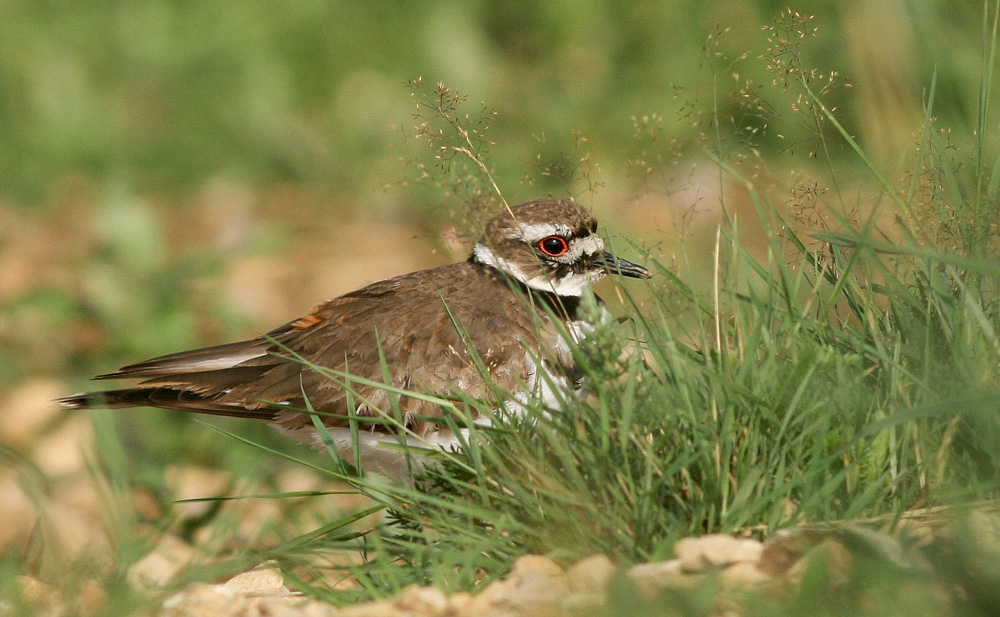
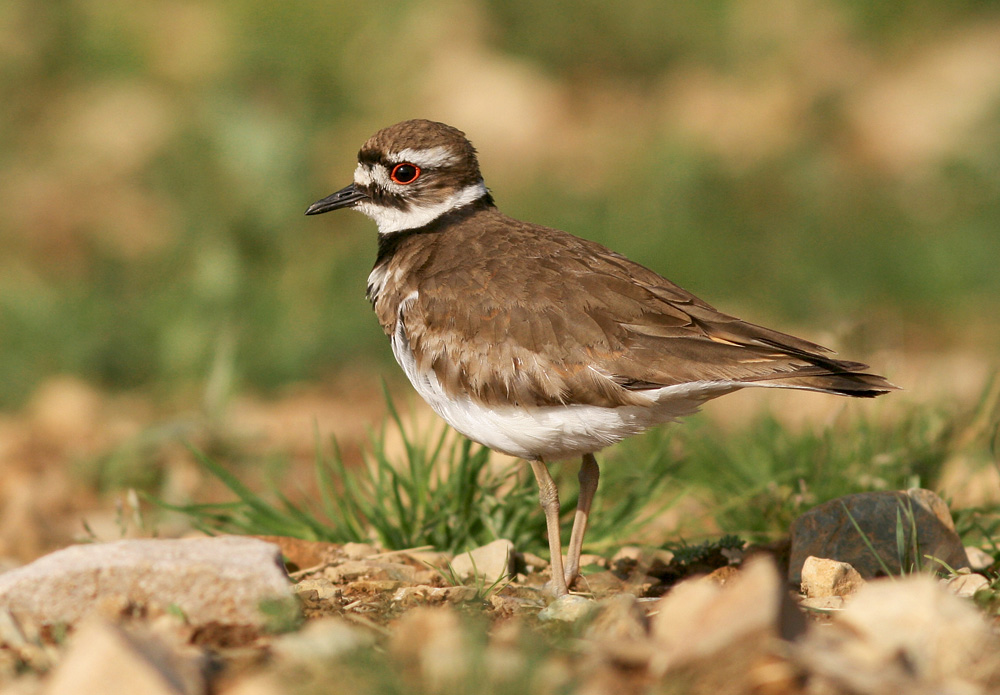
“Killing time” … with a Killdeer

My sister had been telling me recently about a Killdeer family hanging out near the barn in Logy Bay where she keeps her horse. Figuring it was a good opportunity to photograph one of these fun shorebirds, I tagged along as she went to take care of her stable chores a couple weekends ago. Sure enough, one of the adults was hanging out in the field just behind the barn, and the young ones (no longer downy) were grazing not far away. I set myself up on the ground in the corner of the field where they were, hoping they might get used to me and wander over. After an hour or so (with plenty of mediocre photos in the meantime), the adult was walking and standing within metres of me. The light was harsh but once she got at the right angle and away from the taller grass, it was magic. The young ones had disappeared over the crest of a small hill, but no complaints. It’s not every day I get to spend quality time with such a classy bird (even if she did look a little ratty after weeks of raising a family!).

Thanks, sis.

KILL_July20_0567 KILL_July20_0787 KILL_July20_1067 KILL_July20_1115