BLACK-TAILED GODWITS!! Has a Euro fallout begun?!?!

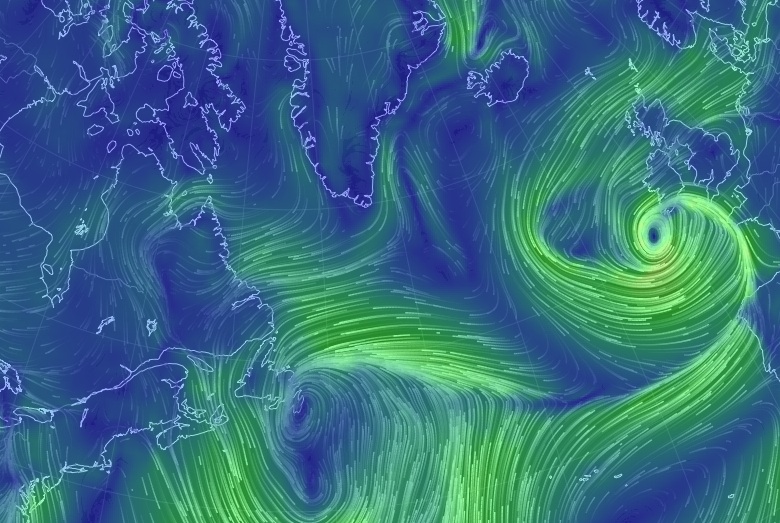
Email chatter between Newfoundland birders the past few days has been about one thing — the winds. They have been lining up nicely across the North Atlantic for several days now – just the way we want to see them in late April. This is THE time for European vagrants to show up on our shores, and a low pressure system churning over the ocean between us and Iceland is a recipe for birds migrating there to get flung in our direction.

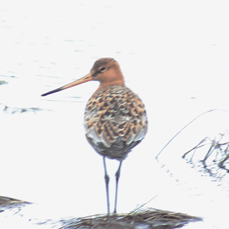
One of two Black-tailed Godwits photographed in Renews today. - Photo: Tony Dunne (April 25, 2014)

One of two Black-tailed Godwits photographed in Renews today.
– Photo: Tony Dunne (April 25, 2014)

I was expecting to hear a report of European Golden Plovers (almost annual in Newfoundland) any day now, but was shocked when I opened my email this evening and saw photos of TWO breeding plumaged BLACK-TAILED GODWITS from Renews today (found and photographed by Tony Dunne). This species occurs in Newfoundland every few years, but considering there are two (just the second record of multiple birds) combined with the persistent easterly winds of the past few days … well my excitement level is spiraling! There are likely more birds out there – and more to come since the winds are forecast not only to continue but to improve over the next 72 hours!!

Plenty of European rarities have been recorded here in late April, including Common Redshank, Eurasian Oystercatcher, Garganey and Redwing … and plenty more could be on the menu based on species that are migrating to Iceland right now. We haven’t seen a real “fallout” of European birds since a similar system in late April 1995 brought dozens of European Golden Plover, five Pink-footed Geese, and four Common Redshanks (North America’s first record, with the only subsequent record occurring here four years later). Numerous Northern Wheatear and as many as three “Eurasian” Whimbrel were also recorded during that time. What was missed?!?! Could we be in for another fallout?!?!

STAY TUNED!!!

This map shows the winds as they currently are (Friday evening, April 25) ... looking awesome!!

This map shows the winds as they currently are (Friday evening, April 25) … looking awesome!!

Another map showing the winds forecast for Sunday afternoon -- things only get better!!

Another map showing the winds forecast for Sunday afternoon — things only get better!!

The potential arrival of European Golden Plovers are a much anticipated thing for Newfoundland birders, who keep an eye on the trans-Atlantic weather and and scour fields and barrens along the northeast coast. - Photo: Jared Clarke

The potential arrival of European Golden Plovers are a much anticipated thing for Newfoundland birders, who keep an eye on the trans-Atlantic weather and and scour fields and barrens along the northeast coast.
– Photo: Jared Clarke (May 16, 2010)

These two Black-tailed Godwits, which showed up on the Bonavista peninsula in May 2011, mark the only other record of multiple birds in Newfoundland.  - Photo: Jared Clarke (May 25, 2011)

These two Black-tailed Godwits, which showed up on the Bonavista peninsula in May 2011, mark the only other record of multiple birds in Newfoundland.
– Photo: Jared Clarke (May 25, 2011)


COMMON SHELDUCK !!

News rolled in late this evening that a drake COMMON SHELDUCK had been photographed in Renews earlier today! This duck, which ranges across much of Europe and Asia, is a mega-rarity in North America, and no doubt any Newfoundland birder who can slip away from whatever responsibilities they might have tomorrow will be out looking for it.

This drake COMMON SHELDUCK was discovered this afternoon, feeding along the tidal flats in Renews. It was very wary and flew off when the photogrpher stepped out of his car - hopefully it will be refound!! - Photo: Tony Dunne (April 2, 2014)

This drake COMMON SHELDUCK was discovered this afternoon, feeding along the tidal flats in Renews. It was very wary and flew off when the photogrpher stepped out of his car – hopefully it will be refound!!
– Photo: Yvonne/Tony Dunne (April 2, 2014)

In fact, Common Shelduck has never “officially” been recorded in North America! Although there have been a number of good candidates in the past decade or so, a shadow of uncertainty has always fell over these reports since this classy-looking duck is regularly kept in captivity and the provenance of all individuals spotted in the “wild” is always questioned. However, there is little doubt that this particular bird is wild and will likely mark the first “accepted” record for the ABA region. All the factors line up:

– There are no known sources for an escaped Common Shelduck anywhere even close to nearby.
– In fact, there is a large & growing breeding population of Common Shelduck in Iceland – and that may indeed be closer than any captive birds!
– The timing is perfect, since Common Shelducks should be migrating to Iceland right now. They typically begin arriving there in late March, with the first one this year having been reported on March 12.
– The weather has been right, with strong E/NE winds prevailing the past few days — just what we need for Icelandic migrants to be directed our way. And Renews, on the far east coast of Newfoundland, is the perfect location for one to stop in.


There is one previous record for the province – an individual that was found and photographed in St. John’s on November 17, 2009. Unfortunately it flew off a few minutes later and was never relocated. (NOTE – As discussed above, this record has never been officially considered or recognized by the ABA, although many birders such as myself feel quite strongly that it was most likely a wild bird that strayed during fall migration from breeding grounds in Iceland.)

Photo: Tony Dunne (April 2, 2014)

Photo: Yvonne/Tony Dunne (April 2, 2014)

Looking Back (?) on Winter

A quick jaunt outside this week, in the deep snow and bitter cold temperatures, would have made it hard to imagine that winter is anywhere near “over”. But, when it comes to birding the “official” winter season ended on February 28. That being said, I’m pretty sure asking any Newfoundland birder if they enjoyed the first few days of “spring birding” this past week, I’d get a good smack in the face.

One thing that is certain is that this has been a tough winter. Winter weather descended on us early, hitting us with prolonged cold temperatures and record snow cover in December. Early January was characterized by heavy winds and bitter temperatures brought on by the polar vortex that gripped much of North America. There was virtually no open fresh water anywhere in the province and any birds unaccustomed to arctic climates must have been finding it tough to survive. Mid-January brought an unexpected (but somewhat welcome) reprieve – warm temperatures and plenty of rain washed away most of the snow and opened up a lot of water. Colder temperatures and abundant snow returned in not time flat, predominating February. In fact, Newfoundland did not experience three straight days without precipitation during the entire season!

The tough winter, along with other factors, certainly took its toll on winter birds & birding on the island. Christmas Bird Counts weighed in with sub-par results and the grand total of 132 species recorded across Newfoundland this winter was the lowest tally since I started keeping track seven years ago. Even many regular & expected birds were seen in lower-than-usual numbers. However, winter was not without its highlights:

This Virginia's Warbler, originally discovered on November 14, 2013 marked the first (and very exciting) record for the island if Newfoundland. It remained elusive during the first few days, frustrating a number of birders - myself included! - Photo: Jared Clarke (November 16, 2013)

This Virginia’s Warbler, originally discovered on November 14, 2013 marked the first (and very exciting) record for the island if Newfoundland. It remained elusive during the first few days, frustrating a number of birders – myself included!
– Photo: Jared Clarke (November 16, 2013)

– Newfoundland’s first Virginia’s Warbler hung on for the first few days of December, just making it to the winter list!

– A Forster’s Tern in Renews in early December was just the 7th record for the province.

– Two Purple Gallinules were discovered (unfortunately dead) – Clarenville in December and McCallum in January. As part of a notable movement into the North Atlantic this winter, how many went undetected?

This COMMON SNIPE at Ferryland marks the third record of this European species for the province and all of eastern North America! - Photo: Jared Clarke (January 25, 2014)

This COMMON SNIPE at Ferryland marks the third record of this European species for the province and all of eastern North America!
– Photo: Jared Clarke (January 25, 2014)

– Yellow-legged Gull returned to St. John’s after an absence of almost two years … and after being elusive for most of the season it became surprisingly reliable for the last week of February.

– A mega-rare Common Snipe was discovered in Ferryland in mid-January, sticking around for weeks and providing excellent comparisons with Wilson’s Snipe.

– And of course, the Snowy Owl invasion that made headlines not only here but across much of North America.

- Photo: Jared Clarke (December 7, 2013)

– Photo: Jared Clarke (December 7, 2013)

And now I’m looking forward — not just to spring but to a more immediate escape from this long long winter. I leave for Hawaii in just a few hours!! I won’t likely be updating the blog during the next two weeks, but expect plenty when I get back!!!

Yellow-legged Gull & Other Gems of Winter at Quidi Vidi

Quidi Vidi lake, in eastern St. John’s, is the hub of local birding activity during winter (if not all year). The resident ducks are joined by many others as ponds & rivers around the city freeze up, and the small areas of open water at Quidi Vidi can provide great looks and photo opportunities with a a variety of interesting birds. Regular species there include Northern Pintail, Greater & Lesser Scaup, & Tufted Duck, among others. This winter they have been joined by more uncommon birds like a drake Wood Duck and a pair of Ring-necked Ducks. Very unusual have been as many as five Common Mergansers visiting the lake the past two weeks, providing great, close views that are very atypical for this normally wary species.

Ring-necked Ducks breed in Newfoundland, but are rarely easy to photograph. This drake has been hanging out in the relatively small patches of open water at Quidi Vidi since early February. - Photo: Jared Clarke (February 22. 2014)

Ring-necked Ducks breed in Newfoundland, but are rarely easy to photograph. This drake has been hanging out in the relatively small patches of open water at Quidi Vidi since early February.
– Photo: Jared Clarke (February 22. 2014)

Since this morning was the first chance I had to visit Quidi Vidi for several weeks, I was happy to find the mergansers, Ring-necked Ducks and the other divers hanging out there and providing some excellent photo opportunities.

Photo opportunities with Common Mergansers are few and far between ,since they usually stick to larger patches of open water and are very wary. A small group making regular visits to Quidi Vidi have been becoming more tolerant of people and allowing some great looks. - Photo: Jared Clarke (February 22. 2014)

Photo opportunities with Common Mergansers are few and far between ,since they usually stick to larger patches of open water and are very wary. A small group making regular visits to Quidi Vidi have been becoming more tolerant of people and allowing some great looks.
– Photo: Jared Clarke (February 22. 2014)

But my main reason for visiting this morning was to look for the adult Yellow-legged Gull which has been so elusive all winter. It has only been seen a handful of times since it was first discovered in late October, but in had been reported at Quidi Vidi each of the past three mornings. I only had a couple hours before having to return home for family obligations, so I was hoping it stuck to its apparent schedule. And sure enough, at ~9:40am I caught sight of this classy looking gull flying in. It landed on the “beach” at the Virginia River outflow, just 20m or so from where I and a handful of other hopeful birders were set up. I managed some decent photos (despite the fact its legs were consistently obscured by snow and/or water) before it moved further away to rest on the nearby ice and eventually flew off when the rest of the gulls were flushed by an eagle. Great start to the weekend!!

The Yellow-legged Gull is, in my opinion, one of the classiest looking gulls out there (and I do love gulls!). The combination of bright yellow bill and legs, brilliant red gony spot, and that magic shade of grey add up to one beautiful bird. - Photo: Jared Clarke (February 22. 2014)

The Yellow-legged Gull (right) is, in my opinion, one of the classiest looking gulls out there (and I do love gulls!). The combination of bright yellow bill and legs, brilliant red gony spot, and that magic shade of grey add up to one beautiful bird.
– Photo: Jared Clarke (February 22. 2014)

Note the single white mirror on P10 and the extensive black in the wingtip of this Yellow-legged Gull (especially compared to the Herring Gull wingtip visible at far left). - Photo: Jared Clarke (February 22. 2014)

Note the single white mirror on P10 and the extensive black in the wingtip of this Yellow-legged Gull (especially compared to the Herring Gull wingtip visible at far left).
– Photo: Jared Clarke (February 22. 2014)

YLGU_Feb222014_2021COME_Feb222014_1447 COME_Feb222014_1593 COME_Feb-222014_1478

Snipes, Bullbirds & Weather Delays

Just five days after the fantastic WINGS tour, I was already getting tired of paperwork and looking forward to getting back out there. Peter Gilchrist, from Toronto, ON was set to arrive late Wednesday night, with Dovekie firmly in his sights. A long-time birder with an extensive Canada (and ABA) list, Peter was gunning for this diminutive little seabird that is regularly seen along the coast of Newfoundland but hardly anywhere else in North America (I grew up calling these little guys “bullbirds“ – one of many colourful bird names unique to Newfoundland!)

Dovekie (known locally as "bullbirds") are often found along our coast during winter. - Photo: Jared Clarke (December 17, 2011)

Dovekie (known locally as “bullbirds”) are often found along our coast during winter.
– Photo: Jared Clarke (December 17, 2011)

But the crazy winds that have been buffeting Newfoundland so much this January weren’t going to make it easy! Strong gusts of about 120km/h blew up overnight and throughout Thursday, cancelling many flights and delaying his arrival by more than 24 hours.

Despite spending far too much time in airports and not seeing his hotel until the wee hours of the night, Peter was rearing to go when I picked him up Friday morning. The winds were still blowing hard & cold when we arrived at Cape Spear twenty minutes later, biting at us as we headed out to the tip. And they weren’t done wreaking havoc on our plans just yet! The strong offshore winds of the past few days had apparently moved all the Dovekie well away from land … we couldn’t find a single one in our 2-3 hours of scanning the waters both near and far. Black Guillemots bobbed around the point, Common Eider and Long-tailed Ducks loafed further out, and Great Cormorants drifted by every few minutes. But no bullbirds!! Concerns started to gnaw away at my confidence … knowing that Dovekie often head back out to sea and become difficult to find by early February, I wondered if these winds might have spelt an early end to their gracing of our shores this year?!?!

After taking a short break to check for the elusive Yellow-legged Gull at various places around the city (it has not been reported in over a month), we headed north to check other coves and harbours for Dovekie – Flatrock, Torbay and Outer Cove. No such luck! Common Loons, Red-breasted Mergansers, Greater Scaup, and even a Red-necked Grebe were present and accounted for – but no bullbirds. And so ended our first (frustrating) day.

This COMMON SNIPE at Ferryland marks the third record of this European species for the province and all of eastern North America! - Photo: Jared Clarke (January 25, 2014)

This COMMON SNIPE at Ferryland marks the third record of this European species for the province and all of eastern North America!
– Photo: Jared Clarke (January 25, 2014)

With most of Saturday to go birding before his flight back to Toronto, Peter and I headed out at first light – straight to Ferryland to look for the COMMON SNIPE that has been hanging out there. This species is extremely rare anywhere but the westernmost reaches of Alaska, with this one being just the third record for all of North America away from the Pacific coast (all of which have occurred in this province!). Since we came up empty-handed at several stops to look for Dovekie on the drive south, I was happy to find the Snipe (along with two of its North American cousin, Wilson’s Snipe) at the usual location, allowing good views as it huddled in the mud & snow.

—

- Photo: Jared Clarke (January 25, 2014)

– Photo: Jared Clarke (January 25, 2014)

- Photo: Jared Clarke (January 25, 2014)

– Photo: Jared Clarke (January 25, 2014)

Next, we headed further south to Bear Cove … hoping that at least one Dovekie had held strong and stayed for our viewing pleasure. Sure enough, we found one (and just one!) feeding about 100 metres offshore. It toyed with us for the first few minutes, coming up for air only momentarily before diving again – but then we were able to enjoy great looks through the scope as it sat on the surface, toying instead with a fish it had just caught. We looked for more as we headed back toward the city, finding none!! We did, however, enjoy even better views of the Common Snipe!

Two excellent birds and two happy birders! What’s that they say – all is well that ends well? Think about that next time you’re stuck in an airport for 24 hours 😉

2013 – A Birding Year in Retrospect

We have been spending the New Year with my family in central Newfoundland – enjoying lots of fun, food and some very wintery weather. The ground is already under several feet of “the white stuff” following a very snowy December and yesterday’s storm. The forests are laden in snow, looking like intricately decorated Christmas trees adorning the countryside. And the record-breaking cold snap that has been going on all week has seen temperatures plunge to well below “frigid”, with windchills well below -30C. Sticking close to home in this cold, snowy weather has given me a chance to reflect on the past year – one that was wonderful in so many ways, including birding.

Townsend's Warbler - while very rare in eastern North America, this was an incredible 14th record for Newfoundland! - Photo: Jared Clarke (January 1, 2013)

Townsend’s Warbler – while very rare in eastern North America, this was an incredible 14th record for Newfoundland!
– Photo: Jared Clarke (January 1, 2013)

The cold, snowy weather of the first few weeks of THIS winter is a stark contrast to the much milder weather this time last year. At least five species of warbler were still kicking around in St. John’s when January 2013 rolled in, compared to just three species seen in December 2013! In fact, one of my birding highlights of last year was spending some quality time with a rare TOWNSEND’S WARBLER (first found on the St. John’s CBC) on New Year’s Day.

Pink-footed Goose. This popular bird marked an impressive eighth record for Newfoundland. - Photo: Jared Clarke (April 20, 2013)

Pink-footed Goose. This popular bird marked an impressive eighth record for Newfoundland.
– Photo: Jared Clarke (April 20, 2013)

One of the highlights as winter continued was the PINK-FOOTED GOOSE that took up residence in a local St. John’s park after being originally discovered in nearby farm fields back in November. It became popular with the many walkers who visit the area daily and was likely one of the most-photographed birds ever in the province. It was the eighth record for Newfoundland, but first in winter.

—

The immature Gray Heron arrived at Little Heart's Ease in early March, marking the second record for the province. - Photo: Jared Clarke (March 10 2013)

The immature Gray Heron arrived at Little Heart’s Ease in early March, marking the second record for the province.
– Photo: Jared Clarke (March 10 2013)

March, which is often one of the more “boring” months for birders in this province, was punctuated by very exciting news – a mega-rare GRAY HERON was hanging out in an open estuary at Little Heart’s Ease!! It was the second for Newfoundland and only the third or fourth for all of North America! Amazingly, it stuck around for many weeks, and was enjoyed by many birders from all over the continent who trekked out to see it. I also had another personal highlight at the very end of March when I was able to enjoy and photograph an IVORY GULL in my hometown of Lewisporte while visiting my parents for Easter. Such a great bird!

The iconic Ivory Gull - one of my favourite birds! - Photo: Jared Clarke (March 31, 2013)

The iconic Ivory Gull – one of my favourite birds!
– Photo: Jared Clarke (March 31, 2013)

A "Greenland" Greater White-fronted Goose that dropped in at Biscay Bay. - Photo: Jared Clarke (April 17, 2013)

A “Greenland” Greater White-fronted Goose that dropped in at Biscay Bay.
– Photo: Jared Clarke (April 17, 2013)

Around the same time, strong northeasterly winds brought two “Greenland” GREATER WHITE-FRONTED GEESE to Twillingate on the northeast coast. While I didn’t get a chance to go see these, I did manage to catch up with another that arrived in Biscay Bay a few days later (early April). Spring continued to heat up, with two LITTLE EGRETS being discovered at Fair Haven, at the northern end of Placentia Bay. While this was the ninth record for this primarily European species, it was the first opportunity I had to see one on this side of the Atlantic.

This Little Egret, one of two that spent some time in Fair Haven this spring, was a great addition to my Newfoundland list. - Photo: Jared Clarke (May 18, 2013)

This Little Egret, one of two that spent some time in Fair Haven this spring, was a great addition to my Newfoundland list.
– Photo: Jared Clarke (May 18, 2013)

Pine Grosbeaks were especially obliging at several locations during our tour, including this stunning male at Gros Morne National Park.

Pine Grosbeaks were especially obliging at several locations during our tour, including this stunning male at Gros Morne National Park.

I was very fortunate in June to lead two bird & nature tours in Newfoundland – sharing the incredible beauty and wonder of my province with visitors from across Canada, Europe and the United States. The first excursion, for Eagle Eye Tours, enjoyed great birds in the form of Boreal Owl, Black-backed Woodpecker, and Grey-cheeked Thrush, along with the amazing spectacles of Witless Bay and Cape St. Mary’s Ecological Reserves (read more here). The second trip, for Massachusetts Audubon, continued all the way across Newfoundland to beautiful Gros Morne National Park, enjoying great birds, whales, and wildflowers along the way (read more here).

KILL_July20_1115Late summer included a fun photography session with a family of Killdeer at a private horse stables in Logy Bay – they have bred there the past few years, and I was kindly invited to spend a morning with them once the young had fledged and were running around the fields. One of the biggest highlights of my entire year was the Eagle Eye tour that I co-led in New Brunswick — visiting great places like Kouchibouguac National Park and Grand Manan Island. Our group soaked in an amazing shorebird spectacle at Johnson Mills, the stunning forests of Acadia, and wonderful seabirds & whales in the Bay of Fundy.

Tens of thousands of Semipalmated Sandpipers were roosting at Johnson Mills at high tide. An estimated three-quarters of the world's population of this small shorebird stop over at the Bay of Fundy during southward migration every year.

Tens of thousands of Semipalmated Sandpipers were roosting at Johnson Mills at high tide. An estimated three-quarters of the world’s population of this small shorebird stop over at the Bay of Fundy during southward migration every year.

This stunning Yellow-throated Vireo was the big highlight of this year's BMI birding. It is quite rare in Newfoundland, with maybe a dozen or so records. Photo: Jared Clarke (Bear Cove, September 21, 2013)

This stunning Yellow-throated Vireo was the big highlight of this year’s BMI birding. It is quite rare in Newfoundland, with maybe a dozen or so records.
Photo: Jared Clarke (Bear Cove, September 21, 2013)

Fall is always an exciting time for birding in Newfoundland, when we spend our time searching for wayward migrants and wanderers that we rarely see. One of my earliest rewards this season was a YELLOW-THROATED VIREO I discovered during our annual “big day” event in late September. This bright little stunner is found less than annually in Newfoundland and was only my second ever, despite lots of time spent looking. Check out this post to see what other gems were found during the day!

This Northern Wheatear was part of mini-invasion into Newfoundland this fall. - Photo: Jared Clarke (October 10, 2013)

This Northern Wheatear was part of mini-invasion into Newfoundland this fall.
– Photo: Jared Clarke (October 10, 2013)

As usual, October turned out to be one of the most happenin’ months of the year. Highlights included at least 10 NORTHERN WHEATEARS that dropped in around the Avalon and northeast coast, a PINK-FOOTED GOOSE photographed in Bonavista, and a long-staying YELLOW-CROWNED NIGHT HERON in a Torbay neighbourhood. However, the clear-cut star of the month was a SCISSOR-TAILED FLYCATCHER also discovered in Torbay, where it hung out for about ten days and was seen by many birders! Not surprisingly, it was just the second record for Newfoundland.

—

This moulting adult Scissor-tailed Flycatcher marked the second record for the province, but the first that was able to be enjoyed by birders. And enjoyed, it was! - Photo: Jared Clarke (Torbay; October 10, 2013)

This moulting adult Scissor-tailed Flycatcher marked the second record for the province, but the first that was able to be enjoyed by birders. And enjoyed, it was!
– Photo: Jared Clarke (Torbay; October 10, 2013)

This Virginia's Warbler, originally discovered on November 14, 2013 marked the first (and very exciting) record for the island if Newfoundland. It remained elusive during the first few days, frustrating a number of birders - myself included! - Photo: Jared Clarke (November 16, 2013)

This Virginia’s Warbler, originally discovered on November 14, 2013 marked the first (and very exciting) record for the island if Newfoundland. It remained elusive during the first few days, frustrating a number of birders – myself included!
– Photo: Jared Clarke (November 16, 2013)

Possibly the most exciting bird of 2013 was discovered in mid-November – the island’s first VIRGINIA’S WARBLER. Despite hanging out in a relatively small area, this very unexpected visitor from across the continent was very elusive and it took me three stressful days to finally catch up with it! It braved some very cool temperatures until at least December 2, furnishing an excellent record for the winter list. I also caught up with another elusive bird – the YELLOW-LEGGED GULL that has been sneaking around St. John’s since late October. I was happy to see this Newfoundland specialty after nearly two years absence!

November also brought with it the first signs of what would turn out to be a massive invasion of SNOWY OWLS. These majestic, almost mythical birds from the north descended on much of eastern North America in late November and early December – but nowhere like the southeast Avalon, where as many as 300 were counted in a single day! I was fortunate enough to enjoy an intimate photo session with one of the beautiful owls at Cape Spear in early December.

- Photo: Jared Clarke (December 7, 2013)

– Photo: Jared Clarke (December 7, 2013)

And while 2013 was also peppered with some major dips and misses (Tundra Swan? Sandwich Tern?!?! Tricolored Heron!!!), I can easily look back at it as a year filled to the brim with exciting birds, wonderful experiences and even a few great adventures. I shared many of those birds and adventures with some equally great people – birders from near and far! And what more can I ask?? Only that 2014 is just as fun and rewarding …

Happy New Year!

The Trials, Tribulations and (eventual) Triumphs of Gull-watching

Expect me to write plenty more about gulls over the next few months – they are a mainstay of winter birding here in St. John’s, a draw for visiting birders, and possibly my favourite group of birds.

Watching gulls requires a lot of patience and a good sprinkling of skill & experience. The ten or more species seen here most winters appear in mind-boggling arrays of white, greys, blacks and browns (yes – the young ones only add confusion) – not to mention the varying pinks, yellows and greens of bills and legs. Identifying them can be tricky for the inexperienced, and finding those “special” ones can be downright difficult. Especially in the case of the elusive Yellow-legged Gull, one or two of which show up here most winters. But one or two tricky birds in a city with tens of thousands of gulls — well, it can also be a needle in a haystack!!

Such was the case these past few days, as a visiting birder from British Columbia and I combed through many masses of gulls to find just one. He had contracted my services as a birding guide to help him find the Yellow-legged Gull – it was head and shoulders the top of his priority list, with anything else just being gravy. Fortunately he had a few days, since I told him up front that finding it was far from guaranteed, and the chance of poor weather was always a threat.

Very few people have been as fortunate to experience Yellow-legged Gull in North America as I have. And as a guide, I've had pretty good luck finding it for eager visitors -but its far from guaranteed. On this tour in January 2010, we finally found it on the very last day ... a coup since it hadn't been seen by anyone in several weeks! - Photo: Jared Clarke (January 12, 2010)

Very few people have been as fortunate to experience Yellow-legged Gull in North America as I have. And as a guide, I’ve had pretty good luck finding it for eager visitors – but it’s far from guaranteed. On this tour in January 2010, we finally found it on the very last day … a coup since it hadn’t been seen by anyone in several weeks!
– Photo: Jared Clarke (January 12, 2010)

We ended up spending three fulls days in dogged pursuit. The first day (Sunday, December 1) was a lovely one to be outside … cool, calm and slightly overcast. But where were the gulls?!?!? We birded the standard areas from sunrise to sunset, with so few gulls being seen that I felt like a bit of a hustler — I was certain he thought I was pulling his leg when I said I had never seen such a lack of gulls in St. John’s at this time of year! But he bit the bullet and we went out again the next day – a cold, crisp one with just a slight breeze. There were lots more gulls … but they were spending their time loafing on the roofs of building around Pleasantville and bathing in Quidi Vidi Lake. Fortunately, I knew vantage points where we could see them and we ran the circuit – checking and re-checking the best spots all day. Not a hint of the bird. I could almost hear him thinking “Who does this guy think he’s fooling?” So, admittedly, I was a bit surprised when he called me up that night to arrange yet another day of searching on Wednesday – a day with a dismal forecast of high winds and rain!!

The forecasters seemed to have it right when I woke up Wednesday morning – the wind and rain was lashing the back of the house. But by the time I got the girls off to preschool and we headed out to go birding at 9:45am, the rain had dissipated. I knew from experience that the wet, windy weather would keep the gulls off the the roofs and encourage them to flock on local grassy fields and ballparks. Sure enough, that’s where we started finding them. We scrutinized thousands of gulls over the next few hours, both on the fields and at the lake … but no sign of our elusive target. To my surprise, the clouds parted, blue sky emerged and at times bright sun shone down on us — and the gulls! As lovely as it sounds, bright sun makes gull-watching all the more difficult, casting hard shadows on the grass, bright glare on the water, and changing the all important shades of grey needed to pick out our bird.

Still … we persevered, scrutinizing the gulls at each location from as many angles as we could. Sometime after 1:00pm we took our place on a hillside overlooking Bally Haly golf course, where (by my estimation) 7000+ gulls had set down for a rest. A small flush erupted as I set up my scope, and I noticed someone with binoculars walking across the golf course to scan the flock (someone I did not recognize). I rushed to scan the flock in case he continued to disturb them — about fifteen second and 500 birds later, that “magic shade of grey” caught my attention. Then the gleaming white head!! I HAD IT!! I was just getting our visitor on the bird when the guy on the field began to walk away, waving his arms as he went in an attempt to flush the gulls!!! Fortunately, only those closest to him paid any heed and the gull stayed put. Although it slept most of the time, we got prolonged looks and ample time to to study the unique shade of grey and white head, and occasionally the head and bill shape as it lazily lifted its head. It stood up just a couple times (once as an unknown presence caused a mass flush that filled the sky with every gull on the field!) — enough for us to see and appreciate those magnificent yellow legs for which the bird is named.

Although yesterday's Yellow-legged Gull was much too distant for photos, this one (photographed at the same location and similar date several years ago) shows that "magic shade of grey" and clean white head that first caught my attention and helped it stand out amongst a myriad of other gulls. The mantle is intermediate between Herring and Lesser Black-backed Gull, and combined with other features like unique head shape, thick, blunt bill and large red gony spot, helps an experienced pick out this needle-in-a-haystack rarity. - Photo: Jared Clarke (December 13, 2008)

Although yesterday’s Yellow-legged Gull was much too distant for photos, this one (photographed at the same location and similar date several years ago) shows that “magic shade of grey” and clean white head that first caught my attention and helped it stand out amongst a myriad of other gulls. The mantle is intermediate between Herring and Lesser Black-backed Gull, and combined with other features like unique head shape, thick, blunt bill and large red gony spot, helps an experienced gull-watcher pick out this needle-in-a-haystack rarity.
– Photo: Jared Clarke (December 13, 2008)

Yellow-legged Gull !! And another happy customer who now understands the value of patience and persistence when hunting for those hard-to-find, tricky-to-identify rare gulls of St. John’s!!

—

BTW – The only other sightings of this gull in the past number of weeks were two ABA Big Year birders Neil Hayward and Jay Lehman, who also spent much time and effort in finding it. They were fortunate!!

Virginia’s Vindication

Just minutes after writing my last post about “dipping” on the Virginia’s Warbler for the past two days, I got a text saying it was being seen off-and-on and currently (somewhat) well. It was 11:50am … I was stoked, but now had SIX kids under my care and had to wait for relief!!

I had my gear ready and met Susan in the driveway as she pulled in at 12:39pm … I gave her a knowing wink as I rushed past her and jumped in the old car. Engine ignited … gear shift to “drive” … and BAM!! Something under my feet snapped very loudly and started lashing around!!! Not sure what it was yet, but the car was as good as dead!

I quickly switched keys with Susan and tore off down the road in the other car … getting a message as I left that the bird was not being seen at the moment. I arrived a short while later to find a handful of people and cameras pointed at an apple tree where it had been two days ago. After 20+ minutes of chatting about the bird and the circumstances of recent observations, some Juncos & Goldfinch starting moving in around us. I honed in on every glimpse of movement in the dense apple tree … minutes passed … then, we heard the distinctive “chip” across the road. It was coming in!! Now I just had to see it!

I changed locations for what I felt was a better angle on the tree, settled in and waited … a few minutes later a dainty bird with a small flash of yellow in the rear end zipped in!! I got several short but clear glimpses as it foraged in the back of some thick, tangly branches … VIRGINIA’S WARBLER!!   I was wishing I had thought to tuck a bottle of good whiskey in my camera bag!!  A few celebratory handshakes and high fives later, it came back in. I took out the camera and followed it through the thick foliage for the next five minutes, snapping off mostly obscured and/or out of focus photos … but I did manage to walk away with four that show the bird relatively well. And, most importantly, I walked away HAPPY !!

VIWA_Nov162013_8032

I finally caught up with Newfoundland’s first Virginia’s Warbler in east St. John’s, after 2.5 days of agonizing misses. Taken at a measly 1/100 second and ISO800, the pic is grainy — but pure, sweet vindication.
– Photo: Jared Clarke (November 16, 2013)

It was very difficult to see the bird in the open, let alone capture a photo, as it foraged in the deepest, thickest parts of an apple tree. - Photo: Jared Clarke (November 16, 2013)

It was very difficult to see the bird in the open, let alone capture a photo, as it foraged in the deepest, thickest parts of an apple tree.
– Photo: Jared Clarke (November 16, 2013)

Return of the Prodi-GULL Son …

The smile that crossed my face when reading the local bird reports this morning was a celebratory one … an old friend of sorts has returned! Although I haven’t seen it yet myself, Bruce Mactavish spotted an adult YELLOW-LEGGED GULL sitting in a flock of gulls on a familiar field in Pleasantville (St. John’s) this morning.

Yellow-legged Gull  (this adult photographed in February 2010) was a rare but regular fixture in St. John's every winter for more than a decade ... however it had been almost two years since the last sighting. Until this morning! - Photo: Jared Clarke (February 14, 2010)

Yellow-legged Gull (this adult photographed in February 2010) was a rare but regular fixture in St. John’s every winter for more than a decade … however it had been almost two years since the last sighting. Until this morning!
– Photo: Jared Clarke (February 14, 2010)

Most Yellow-legged Gulls recorded in Newfoundland have been adults, although this intriguing immature gull is considered by many to have been a second-winter Azorean/Atlantis Yellow-legged Gull. - Photo: Jared Clarke (January, 2008)

Most Yellow-legged Gulls recorded in Newfoundland have been adults, although this intriguing immature gull is considered by many to have been a second-winter Azorean/Atlantis Yellow-legged Gull.
– Photo: Jared Clarke (January, 2008)

Birders (and especially the few of us that consider ourselves gull fans) in St. John’s have been spoiled by this species the past dozen or so years. Yellow-legged Gull is a European species that occurs primarily in the eastern Atlantic/Mediterranean and is a very rare wanderer to North America (ABA Code 4). Yet, at least one has shown up here every fall and/or winter since the late 1990’s — enjoyed by local larophiles and a draw for many visitors, listers and even bird tours.There have been as many as three recorded around the city some years, and one usually hangs out for the entire winter. It can be tough to find sometimes amongst the tens of thousands of large gulls that winter here, making it elusive but well worth the hunt. St. John’s has been the only place in North America where this species could be seen regularly and (somewhat) reliably!

The majority (if not all) of Yellow-legged Gulls seen here have been theorized to originate from the Azores, where the Atlantis race has a slightly darker mantle and unique pattern of head streaking in fall/early winter. - Photo: Jared Clarke (December 3, 2010)

The majority (if not all) of Yellow-legged Gulls seen here have been theorized to originate from the Azores, where the Atlantis race has a slightly darker mantle and unique pattern of head streaking in fall/early winter.
– Photo: Jared Clarke (December 3, 2010)

However, something changed two winters ago (2011-12) — an adult Yellow-legged Gull showed up in early fall as expected, although sightings were sporadic and it often went long periods not being seen. Then it disappeared altogether – the last known sighting was on January 15, 2012 when I photographed it bathing with other gulls in some open water at Quidi Vidi lake. Despite lots of searching, often by experienced eyes, it was not seen again that winter. And for the first time in more than twelve years, the species was not recorded in Newfoundland at all the following fall or winter. We were worried!!

Hopefully this bird settles in and stays for a while … certainly there are people out there (near and far) who would love to enjoy it. I know I would, and I’ll be looking every chance I get!

Sometimes it takes experienced eyes to pick out and safely identify a Yellow-legged Gull. Although they can be distinctive among a flock of more typical gulls, there are a few hybrid possibilities that need to be eliminated. The clean white head in winter (or unique pattern of head streaking in fall, see above) and wingtip pattern are important clues to picking out the North American rarity. - Photo: Jared Clarke (December 13, 2009)

Sometimes it takes experienced eyes to pick out and safely identify a Yellow-legged Gull. Although they can be distinctive among a flock of more typical gulls, there are a few hybrid possibilities that need to be eliminated. The clean white head in winter (or unique pattern of head streaking in fall; see above) and wingtip pattern are important clues to picking out this North American rarity.
– Photo: Jared Clarke (December 13, 2009)

No doubt about it -- It's a classy looking gull! - Photo: Jared Clarke (February 14, 2010)

No doubt about it — It’s a classy looking gull!
– Photo: Jared Clarke (February 14, 2010)

It’s happened — SCISSOR-TAILED FLYCATCHER !!

I was on “daddy duty” this morning, home alone with my two pre-school girls, when I found out that Bruce Mactavish had spotted a “Western Kingbird” flying across the road in Torbay an hour or so earlier. That’s a good bird for Newfoundland (less than annual), and worth looking for. It was cold and windy out, so I knew it might be tough … but the fact that he had also found a “content” Northern Wheatear nearby gave me the motivation to go. Either bird is always nice to see, and the wheatear might cooperate for photos.

The girls headed off to music class with their grandmother at 11:15am, so I took the opportunity to sneak out for an hour or so. As expected, no sign of the “kingbird”, but I readily found the Northern Wheatear in a cemetery where Bruce had described. Light was nice and it was fairly tolerant of me, so I got some nice photos. I spent another 20 minutes looking for the “kingbird”, but no dice. In the meantime, Lancy Cheng joined me in the hunt.

This Northern Wheatear was part of mini-invasion this week - at least seven have been reported on the eastern Avalon. - Photo: Jared Clarke (October 10, 2013)

This Northern Wheatear was part of mini-invasion this week – at least seven have been reported on the eastern Avalon.
– Photo: Jared Clarke (October 10, 2013)

A short while after heading home, I got a text from Lancy that he had seen the “kingbird” near the original location. “Great”, I thought. But I had no car for the next little while and couldn’t go. Oh well …

My mindset changed drastically an hour later (2:30pm) when I got another text saying that Dave Brown had arrived, seen the bird, and re-identified it as a SCISSOR-TAILED FLYCATCHER!! This is a mega mega rarity, having only been recorded once in the province (2001) and far out of reach for birders. And it’s a beautiful bird, to boot!!

This Scissor-tailed Flycatcher was initially misidentified based on a brief glimpse early this morning. Luckily it was refound and identified by Dave Brown - and birders were soon able catch up to it! - Photo: Jared Clarke (October 10, 2013)

This Scissor-tailed Flycatcher was initially misidentified based on a brief glimpse early this morning. Luckily it was refound and identified by Dave Brown – and birders were soon able catch up to it!
– Photo: Jared Clarke (October 10, 2013)

I was in anguish over the next hour while I hung out at home with the girls and made a few frantic phone calls to get the details. At 3:30pm I was jetting over the road, making record time to Torbay where I found a flock of birders staring at a dogberry (aka mountain ash) tree about 75m away. There it was – sitting quietly but in plain view. SCORE!!! I stayed there for the next two hours, watching and taking (mostly distant) photos as the bird moved around the neighbourhood (a neighbourhood that was likely confused and bemused by the dozen or so people who had descended unannounced on their street with scopes, bins, and cameras).

STFL_Oct102013_6323 STFL_Oct102013_6437WHAT A BIRD!!!