A Few Days in July

This past July was one to remember in Newfoundland … one that was great not only for the tourists who soaked in the great weather, massive icebergs, and frolicking whales but also for us locals who got to enjoy it ALL in our own backyard (literally, for some!). July was packed with amazing weather from start to finish – sometimes a little too amazing. It turned out to be the hottest month on record for much of the island, including here on the northeast Avalon.

LIGU_July312014_5831July ended with a bang for local birders, when Bruce Mactavish discovered an immature Little Gull hanging out in a sheltered bay at Mobile (just 30 minutes south of St. John’s). I was among the first on the scene, enjoying great looks at a bird that has always managed to elude me on this side of the Atlantic. They are only recorded every few years in Newfoundland, usually at some far-flung location and/or on the move, never to be seen again. The fact that this one stayed around for several days, feasting on the plentiful capelin and entertaining birders, was both surprising and appreciated!

LIGU_July312014_5730

My two inquisitive daughters check out what's lurking in the tidal pools at Fox's Dock, near Lewisporte.

My two inquisitive daughters check out what’s lurking in the tidal pools at Fox’s Dock, near Lewisporte.

But, let me take a few steps back and recap some of the other wonderful moments I was able to enjoy out in nature. After finishing up a busy few weeks of nature tours and bird guiding, I took much of July to hang out with my family. One of our my first adventures was to pack up and take my two little girls to visit my parents in Lewisporte (Notre Dame Bay) – the first time I’ve really done something like that without my incredible wife, who was incredibly busy taking classes for her Master’s program and needed the break from parenting! During out little vacation, we visited relatives, went exploring at a local beach, and had lots of fun doing family stuff. I even took advantage of having “Grandma & Poppy” around to sneak out and do a little exploring on my own.

–

We must have missed the capelin spawn by just a few hours -- although there was no sign of any fish at Fox's Dock, the beach itself was completely covered in eggs!

We must have missed the capelin spawn by just a few hours — although there was no sign of any fish at Fox’s Dock, the beach itself was completely covered in eggs!

A close-up of the capelin eggs. Huge schools of these amazing fish "roll" in with the tide and deposit thousands of eggs each - a spectacle that takes place on rocky/sandy beaches all over Newfoundland.

A close-up of the capelin eggs. Huge schools of these amazing fish “roll” in with the tide and deposit thousands of eggs each – a spectacle that takes place on rocky/sandy beaches all over Newfoundland.

A hot afternoon walk around a local pond helped me find a few early blossoms of Small Purple Fringed Orchid (Platanthera psycodes) hiding amongst the grass.

A hot afternoon walk around a local pond helped me find a few early blossoms of Small Purple Fringed Orchid (Platanthera psycodes) hiding amongst the grass.

Also hiding amongst the grass were some Green Frogs.

Also hiding amongst the grass were some Green Frogs …

 ... and lots of lovely dragonflies, most of which I had no chance of identifying!

… and lots of lovely dragonflies, most of which I had no chance of identifying!

Butterflies were also plentiful, including a few White Admirals. I found these to be more plentiful than in most years, but not nearly as abundant as Milbert's Tortoiseshells which were by far the most common butterfly on the wing that week.

Butterflies were also plentiful, including a few White Admirals. I found these to be more plentiful than in most years, but not nearly as abundant as Milbert’s Tortoiseshells which were by far the most common butterfly on the wing that week.

Another solitary stroll took me to a local bog which I had found to be full of orchids late last summer. This year, visiting a full month earlier, I found an abundance of beautiful Rose Pogonia (Pogonia ophioglossoides).

Another solitary stroll took me to a local bog which I had found to be full of orchids late last summer. This year, visiting a full month earlier, I found an abundance of beautiful Rose Pogonia (Pogonia ophioglossoides).

Far less common in that bog were Clubspur Orchids, understated and easily overlooked in the tall vegetation.

Far less common in that bog were Clubspur Orchids (Platanthera clavellata), understated and easily overlooked in the tall vegetation.

Common Ringlets were also plentiful around Lewisporte ...

Common Ringlets were also plentiful around Lewisporte …

... as were European Skippers. These were my "first of the season".

… as were European Skippers. These were my “first of the season”.

Evening light at one of our favourite picnic spots.

Evening light at one of our favourite picnic spots.

FamilyFunMBG_4696

Family fun continued after we headed back to St. John’s — even when it meant convincing them all to join me on yet another nature walk 😉  We all headed to MUN Botanical Gardens, where we (somewhat) escaped the heat with a stroll through the shaded forest. The girls had a great time solving a series of animal riddles posted along the trail, while I managed to track down a single stem of an orchid I had been searching for.

Spotted Coralroot (Corallorhiza maculata)

Spotted Coralroot (Corallorhiza maculata)

GratesCoveWash_5128Once Susan finished her classes, we headed out to Grate’s Cove for a few days.  Whales were busy feeding all around the cove, even breaching occasionally. Harebells were in full bloom all over the barren landscape, and the first Whimbrel of the summer were sailing overhead – a harbinger of fall shorebird migration. I even managed to sneak away for a few hours to hike a short trail and explore some local bogs that I’ve been eying curiously for some time now.

A hoard of young warblers, including this Black & White Warbler, was gathered at the entrance of a walking trail in Old Perlican. It was nice to see so much activity in one small area - a sign of things to come as the birds gear up for fall migration.

A hoard of young warblers, including this Black & White Warbler, was gathered at the entrance of a walking trail in Old Perlican. It was nice to see so much activity in one small area – a sign of things to come as the birds gear up for fall migration.

Pitcher Plants were in full glory, dotting the landscape and every wet patch in the area.

Pitcher Plants were in full glory, dotting the landscape and every wet patch in the area.

Dragonsmouth Orchid (Arethusa bulbosa) was fairly common on the bog I trekked across between Old Perlican and Grates Cove.

Dragonsmouth Orchid (Arethusa bulbosa) was fairly common on the bog I trekked across between Old Perlican and Grates Cove.

Grasspink_July20_4940

Grasspink (Calopogon tuberosus) was far less obvious – I only found two while wandering around in a large bog where I might have expected far more.

Dragonsmouth_July20_4920 Grasspink_July20_4955 Grasspink_July20_4948

Bog Coppers are beautiful little butterflies that I often overlook (or mistake for something else) ... this one posed nicely beside a pond in Old Perlican.

Bog Coppers are beautiful little butterflies that I often overlook (or mistake for something else) … this one posed nicely beside a pond in Old Perlican.

A nice patch of Water Lobelia (Lobelia dortmanna) was growing along the sandy edge of a pond in Lower Island Cove, where we stopped for a picnic on the way back home.

A nice patch of Water Lobelia (Lobelia dortmanna) was growing along the sandy edge of a pond in Lower Island Cove, where we stopped for a picnic on the way back home.

WaterLobelia_July22_5206As I said – definitely a July to remember.

“Newfoundland Adventure”, June 29 – July 5

Newfoundland is an amazing place at any time of year, but early summer just might take the cake. It certainly did this year! Starting at the end of June, I was fortunate to join another great group of visitors from all over the world for their “Newfoundland Adventure” with Wildland Tours. Here are just a few photo highlights of the many, many things we enjoyed!

Here is our Wildland Tours group at Tickle Cove, Bonavista Bay. What a great bunch!!

Here is our Wildland Tours group at Tickle Cove, Bonavista Bay. What a great bunch!!

Our tour began & ended in North America' oldest city. There's never a lack of things to do in St. John's.

Our tour began & ended in North America’ oldest city. There’s never a lack of things to do in St. John’s.

The whales had arrived en masse in the days before our tour, and they entertained us from day one when we visited Witless Bay Ecological Reserve with O'Brien's Tours.

The whales had arrived en masse in the days before our tour, and they entertained us from day one when we visited Witless Bay Ecological Reserve with O’Brien’s Tours.

Humpbacks_June30_2668

Berry season was still weeks away, but the blossoms were a good sign. These blueberry flowers were at Blackhead.

Berry season was still weeks away, but the blossoms were a good sign. These blueberry flowers were at Blackhead.

This nealy iconic photo of St. John's narrows, an iceberg and a humpback whale was taken from Cape Spear, North America's easternmost point.

This nealy iconic photo of St. John’s narrows, an iceberg and a humpback whale was taken from Cape Spear, North America’s easternmost point.

A pair of Willow Ptarmigan graced us by crossing the road near Newfoundland's southernmost lighthouse, Cape Pine.

A pair of Willow Ptarmigan graced us by crossing the road near Newfoundland’s southernmost lighthouse, Cape Pine.

Cape Pine also produced our first Short-tailed Swallowtails of the trip ... they were plentiful at most headlands during the week.

Cape Pine also produced our first Short-tailed Swallowtails of the trip … they were plentiful at most headlands during the week.

Whales were part of the action every day - like this one at St. Vincent's which was breaching and waving.

Whales were part of the action every day – like this one at St. Vincent’s which was breaching and waving.

No visit to Newfoundland is complete without a visit to Cape St. Mary's. Despite some heavy fog (which, to be honest, is part of the experience there!) we enjoyed amazing views of the Northern Gannet colony.

No visit to Newfoundland is complete without a visit to Cape St. Mary’s. Despite some heavy fog (which, to be honest, is part of the experience there!) we enjoyed amazing views of the Northern Gannet colony.

Our group also enjoyed a zodiac tour of Bonavista Bay with Sea of Whale Adventures ...

Our group also enjoyed a zodiac tour of Bonavista Bay with Sea of Whale Adventures …

... and, of course, icebergs were one of the main attractions.

… and, of course, icebergs were one of the main attractions.

The tour ended in the scenic community of King's Cove.

The tour ended in the scenic community of King’s Cove.

A short hike around King's Cove (while the rest of the group enjoyed the zodiac ride!) included a very confiding Spotted Sandpiper

A short hike around King’s Cove (while the rest of the group enjoyed the zodiac ride!) included a very confiding Spotted Sandpiper.

As well as some confiding dragonflies like this Forcipate Emerald (a new one for me) ...

As well as some confiding dragonflies like this Forcipate Emerald (a new one for me) …

and this Four-spotted Skimmer.

and this Four-spotted Skimmer.

We took advantage of the sunny afternoon to hike the Skerwink Trail. Incredible scenery ...

We took advantage of the sunny afternoon to hike the Skerwink Trail.

Incredible scenery ...

Incredible scenery …

whales ...

whales …

and another stunning iceberg.

and another stunning iceberg.

We also encountered our first caplin of the trip -- masses of them spawning and rolling on a beach as we watched from a cliff high above.

We also encountered our first capelin of the trip — masses of them spawning and rolling on a beach as we watched from a cliff high above.

We also enjoyed a visit to Elliston, where the Atlantic Puffins can be enjoyed comfortably from land.

We also enjoyed a visit to Elliston, where the Atlantic Puffins can be enjoyed comfortably from land.

This Mustard White was at Elliston was a bit of a surprise for me ... I see them so rarely in eastern Newfoundland, though they may be more common than I realize in other areas.

This Mustard White was at Elliston was a bit of a surprise for me … I see them so rarely in eastern Newfoundland, though they may be more common than I realize in other areas.

These Beach-head Irises were blooming in many locations. Here, the town of Elliston lingers in the background.

These Beach-head Irises were blooming in many locations. Here, the town of Elliston lingers in the background.

Northern Blue butterflies were abundant at the tip of the Bonavista Peninsula ... I spent a fair bit of time chasing them around the barrens trying to catch a decent photo!

Northern Blue butterflies were abundant at the tip of the Bonavista Peninsula … I spent a fair bit of time chasing them around the barrens trying in vain to catch a decent photo!

Food is a big part of any tour, and this one didn't disappoint. This delicious mooseburger (complete with partridgeberry ketchup and homemade chips) was a popular choice at the Bonavista Social Club.

Food is a big part of any tour, and this one didn’t disappoint. This delicious mooseburger (complete with partridgeberry ketchup and homemade chips) was a popular choice at the Bonavista Social Club.

Another brilliant iceberg was grounded just off the scenic little outport of Red Cliff, Bonavista Bay.

Another brilliant iceberg was grounded just off the scenic little outport of Red Cliff, Bonavista Bay.

The sea arch at nearby Tickle Cove is always a beautiful sight, but especially when you can spot a massive iceberg through it!

The sea arch at nearby Tickle Cove is always a beautiful sight, but especially so when you can spot a massive iceberg through it!

A shot of Tickle Cove with an iris in the foreground.

A shot of Tickle Cove with an iris in the foreground.

Beach Pea is another lovely but often overlooked flower that blossoms on our beaches.

Beach Pea is another lovely but often overlooked flower that blossoms on our beaches.

We ended the week with a wonderful day back in St. John's.

We ended the week with a wonderful day back in St. John’s.

Our final day of the tour began with a boat tour out of St. John's harbour ... passing the iconic Battery along the way.

Our final day of the tour began with a boat tour … passing the iconic Battery along the way.

Not surprisingly, the highlight was getting up close and personal with more icebergs. Here we could see St. John's in the distance between two bergs.

Not surprisingly, the highlight was getting up close and personal with more icebergs. Here we could see St. John’s in the distance between two bergs.

Icebergs_StJohns_3826 Iceberg_StJohns_3886bw

A view of St. John's harbour as we entered the narrows.

A view of St. John’s harbour as we entered the narrows.

We also hiked from Signal Hill to the qualit Quidi Vidi village, stopping to enjoy some Bald Eagle chicks along the way.

We also hiked from Signal Hill to the quaint Quidi Vidi village, stopping to enjoy some Bald Eagle chicks along the way.

Our last stop was Middle Cove Beach, just north of the city ...

Our last stop was Middle Cove Beach, just north of the city …

...where we found a small run of capelin "rolling" on the beach.

…where we found a small run of capelin “rolling” on the beach.

Capelin require coarse sandy beaches in order to spawn ... huge schools "roll" in with the tide, with the females depositing as many as 50,000 eggs each!

Capelin require coarse sandy beaches in order to spawn … huge schools “roll” in with the tide, with the females depositing as many as 50,000 eggs each!

Caplin_MCVJuly5_4141It was another awesome week, filled with lots of fun, beautiful weather, and all the trimmings of a real Newfoundland adventure! Icebergs, whales, seabirds, moose, excellent food … and a great group of people to share it with. Thanks to everyone for joining me on this Wildland Tours excursion. I’m looking forward to leading another one in August!

Bergs, birds, whales & history …

June has been a hectic month … hence the lack of blog updates. I have been busy leading a number of tours – private bookings and for folks like Wildland Tours and Eagle Eye Tours/Adventure Canada. The excursions have ranged from one to seven days and involved birds, bergs, whales, and even a little history! It’s nice to be making use of more than just my birding knowledge for a change!

I begin yet another week-long tour in just a few hours, so no time for a detailed post — but here are some photo highlights from the past few weeks. It has been fun!!

Icebergs have been everywhere this spring - including one we enjoyed right alongside the huge seabird colonies of Witless Bay Ecological Reserve (Wildland Tours/Adventure Canada/O'Briens Boat Tours)

Icebergs have been everywhere this spring – including one we enjoyed right alongside the huge seabird colonies of Witless Bay Ecological Reserve (Wildland Tours/Adventure Canada/O’Briens Boat Tours)

The massive colonies of Common Murre in Witless Bay Ecological Reserve are always awe-inspiring! (Wildland Tours/Adventure Canada/O'Brien's Boat Tours)

The massive colonies of Common Murre in Witless Bay Ecological Reserve are always awe-inspiring!

COMUflock_WBERJune12_0829 GreenIsland_WBERJune12_0887

Atlantic Puffin, Witless Bay Ecological Reserve (Wildland Tours/Adventure Canada/O'Brien's Boat Tours)

Atlantic Puffin, Witless Bay Ecological Reserve

Common Murre, Witless Bay Ecological Reserve (Wildland Tours/Adventure Canada/O'Brien's Boat Tours)

Common Murre, Witless Bay Ecological Reserve

Razorbills, Witless Bay Ecological Reserve (Wildland Tours/Adventure Canada/O'Brien's Boat Tours)

Razorbills, Witless Bay Ecological Reserve

Cape Pine is the southernmost point of land in Newfoundland ...

Cape Pine is the southernmost point of land in Newfoundland …

STSwallowtail_June17_1216

… and an excellent place to see Short-tailed Swallowtail, which has a very restricted range and is more or less an island specialty.

Nearby St. Shott's is the island's southernmost community, and beautifully rugged. (Wildland Tours)

Nearby St. Shott’s is the island’s southernmost community, and beautifully rugged.

Following on this theme, North America's southernmost herd of Woodland Caribou can often be seen in this area, too.

Following on this theme, North America’s southernmost herd of Woodland Caribou can often be seen in this area, too. These ones were near Sam’s River.

Arctic Tern have been nesting on the bach at St. Vincent's for a number of years now, allowing for unusually close encounters with these often shy birds.

Arctic Tern have been nesting on the bach at St. Vincent’s for a number of years now, allowing for unusually close encounters with these often shy birds.

ARTE_June17_1261

Castle Hill provides not only a great look at an important part of Newfoundland's history, but also a fantastic view over Placentia, which was once the "French capital" of our island.

Castle Hill provides not only a great look at an important part of Newfoundland’s history, but also a fantastic view over Placentia, which was once the “French capital” of our island.

We enjoyed a visit by a pair of inquisitive Gray Jays while visiting Castle Hill.

We enjoyed a visit by a pair of inquisitive Gray Jays while visiting Castle Hill.

I enjoyed some stunning evening light and scenery at the beautiful boat harbour in St. Bride's ...

I enjoyed some stunning evening light and scenery at the beautiful boat harbour in St. Bride’s …

... some of it a sad reminder of the struggle that these communities have had to face since the closure of the cod fishery.

… some of it a sad reminder of the struggle that these communities have had to face since the closure of the cod fishery.

Retired_1347

The sunset at St. Bride's was amazing.

The sunset at St. Bride’s was amazing.

Sunset_StBrides_1419Sunset_StBrides_June17_1334

Cape St. Mary's and its Northern Gannets are always a crowd pleaser - and all my groups had fantastic days there, with or without the fog!

Cape St. Mary’s and its Northern Gannets are always a crowd pleaser – and all my groups had fantastic days there, with or without the fog!

NOGA_June18_1547 NOGAimm_June18_1544

The icebergs in Bonavista & Trinity Bays were incredible - in number, size and sheer beauty. Some dramatic skies added to the scene at times.

The icebergs in Bonavista & Trinity Bays were incredible – in number, size and sheer beauty. Some dramatic skies added to the scene at times.

Icebergs_June19_1736

Sometimes, a whale or two even got in the way of the iceberg viewing  ;)

Sometimes, a whale or two even got in the way of the iceberg viewing 😉

A visit to historic Trinity was also a highlight.

A visit to historic Trinity was also a highlight.

Trinity_1686

Our tour of "Cape Random" (near New Bonaventure) was fun, and included yet another iceberg right in the cove.

Our tour of “Cape Random” (near New Bonaventure) was fun, and included yet another iceberg right in the cove.

CapeRandom_1855 CapeRandom_1857 CapeRandom_1863CapeRandom_1894

ATPUelliston_June20_1979

We also enjoyed a short visit with the Atlantic Puffins at Elliston, where the colony can be viewed comfortably from land.

ATPUelliston_June20_2057

A boat tour out of St. John's harbour give a new perspective on Cape Spear, North America's easternmost point - this time with a rainstorm brewing in the background.

A boat tour out of St. John’s harbour gives a new perspective on Cape Spear, North America’s easternmost point – this time with a rainstorm brewing in the background.

And, of course, more icebergs. There were some mammoths outside the narrows this month!

And, of course, more icebergs. There were some mammoths outside the narrows this month!

Humpback Whales have been showing up in the past two weeks, following the capelin inshore. I expect to see a lot more of them this week!

Humpback Whales have been showing up in the past two weeks, following the capelin inshore. I expect to see a lot more of them this week!

Wrapping-up: The “Euro Invasion” of Spring 2014

It has been a crazy three weeks! It all began when we started noticing strong, persistent northeasterly winds setting up across the North Atlantic in late April – a system that Newfoundland birders hope for at this time of year. Spring migration of European birds over the Atlantic, especially to Iceland & Greenland, is peaking in late April and early May and history has shown that these weather systems can bring wayward migrants to our coasts.

This fun photo, showing a mega-rare Common Redshank with an iceberg backdrop, is a nice reflection for how spring has been in Newfoundland. Cold, beautiful, and extremely exciting!!

This fun photo, showing a mega-rare Common Redshank with an iceberg backdrop, is a nice reflection for how spring has been in Newfoundland. Cold, beautiful, and extremely exciting!!

The "event" started with two Black-tailed Godwits discovered in Renews, and just kept growing over the next two weeks.

The “event” started with two Black-tailed Godwits discovered in Renews, and just kept growing over the next two weeks.

It all started coming together on April 25, when two Black-tailed Godwits were photographed in Renews. The next morning, the first European Golden Plover was discovered in a field just 100m from the godwits. When eleven more were reported from three other locations across the province (Cape Race, St. John’s and Gros Morne National Park), the alarm bells started ringing. With the winds still blasting in from the northeast and a forecast for them to stay that way for the foreseeable future, we knew we were in for an exciting event. And the birds just kept coming …

A Summary of the Spring 2014 “Invasion” (April 25 – May 13)

  • COMMON REDSHANK – 2 !! A single bird present at Renews from May 3-13 was joined briefly by a second on May 4.
  • ROSS’S GULL – an adult at Torbay (April 29-30) was completely unexpected and may have caused more local excitement than any other bird this spring.
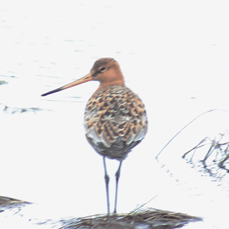
  • BLACK-TAILED GODWIT – a total of 12 (!!) reported at six locations island-wide.
  • EUROPEAN GOLDEN PLOVER – 200+ individuals reported from two dozen locations all over the island & SE Labrador … not quite a record invasion, but very very impressive.
  • NORTHERN WHEATEAR – Dozens reported from locations island-wide – and clearly many more went unnoticed.
  • (EURASIAN) WHIMBREL – 1 at Cape Spear (May 3)
  • DUNLIN (Icelandic/Greenland race) – 1 at Cape Spear (May 3). This may be of the schinzii subspecies which has very few, if any, previous records in North America.
The breadth of the invasion was evident not only in the number of European Golden Plover reported in early May, but also the geographic distribution across the entire east/northeast coast of Newfoundland and southeastern Labrador.

The breadth of the invasion was evident not only in the number of European Golden Plover reported in early May, but also the geographic distribution across the entire east/northeast coast of Newfoundland and southeastern Labrador.

The largest single flock of European Golden Plovers occurred in Goulds (St. John's), where an initial handful of birds swelled to at least 90 in just a few days!

The largest single flock of European Golden Plovers occurred in Goulds (St. John’s), where an initial handful of birds swelled to at least 90 in just a few days!

These European Golden Plovers, part of a flock of nine, were in an unassuming backyard at Old Perlican on the northern tip of the Avalon Peninsula.

These European Golden Plovers, part of a flock of nine, were in an unassuming backyard at Old Perlican on the northern tip of the Avalon Peninsula.

During that time, I have been able to enjoy seeing many of these amazing birds, visit some of my favourite birding locations, and share the experience with many other birders from near & far. I have especially enjoyed birding with a number of keen birders who visited from all over North America to see these incredible ABA rarities … people from Ontario, Maine, New York, Massachussetts, Michigan, North Carolina, Texas & California!!

I was fortunate enough to see six Black-tailed Godwits in four far-flung locations during  the past few weeks - including two at Renews, two in St. Paul's Inlet, one in Goulds and this one at Old Perlican.

I was fortunate enough to see six Black-tailed Godwits in four far-flung locations during the past few weeks – including two at Renews, two in St. Paul’s Inlet, one in Goulds and this one at Old Perlican.

BTGO_May4OldPerlican_9022After a long, cold but very thrilling three weeks, the winds have finally turned southerly and many of our lingering visitors appear to have moved on – hopefully back to their intended destinations of Iceland & Greenland. Regular spring migration is rearing its head now, with a flood of more expected arrivals from down south being reported in the past few days. While the “Euro Invasion” of spring 2014 is winding down, the awesome birds & birding of these past few weeks will remain fresh in our memories for a long time to come … and we’ll always be keeping an eye on the winds!

Northern Wheatears are rare but expected in Newfoundland most springs. However, these winds brought dozens of reports, likely of birds that would have been destined for breeding grounds in Iceland or Greenland rather than northern Labrador.

Northern Wheatears are rare but expected in Newfoundland most springs. However, these winds brought dozens of reports, likely of birds that would have been destined for breeding grounds in Iceland or Greenland rather than northern Labrador.

NOWH_Ma22014Ferryland_8531a

However, the real star of the Euro Inasion was a Common Redshank at Renews from May 3-13. Since it represented just the third record (and sixth individual) for both Newfoundland and North America, many birder came from near and far to see it. A second individual presnt at the same location on May 4 was chased off by the first and never seen again!

However, the real star of the Euro Invasion was a Common Redshank at Renews from May 3-13. Since it represented just the third record (and seventh individual) for both Newfoundland and North America, many birder came from near and far to see it. A second individual presnt at the same location on May 4 was chased off by the first and never seen again!

RedshankFlight_9610

The striking wing and rump pattern of Common Redshank is very different than the familiar Greater Yellowlegs that were also hanging out at Renews.

Redshank_May102014_9434

We seem to have said “Good-bye” to this popular visitor, with no reports since May 13 despite plenty of looking. And so winds down this amazing event that has dominated Newfoundland (and North American) birding so far this spring!

COMMON REDSHANK – A Mega Falls!!

Common Redshank is one of those birds that a Newfoundland birder (well, any North American birder!!) dreams about … Not only is it beautiful and interesting, but it is a mega rarity that has only ever shown up twice before. And it is also one that was front and foremost on the minds of many birders here during this past week, while persistent NE winds have been dropping European/Icelandic vagrants on our island left, right & centre.

Although I had been predicting for days now that a Common Redshank would be found, I was still left gob-smocked when Bruce Mactavish called me at home this morning to say that he and Ken Knowles had found one in Renews — on the very beach that visiting birder Barrett Pierce (TX) and I had walked just 18 hours earlier. Unfortunately, I had committed to lead a group walk for local club this morning and couldn’t back out!! It was another agonizing four hours before I could turn my car south and head to Renews, cursing the weekend traffic (however light) as I went. I received news about halfway there that it had flown off with two Greater Yellowlegs, but convinced myself it would return.

My initial looks at the Common Redshank were a little more distant than I would have liked, but completely satisfying nonetheless.

My initial looks at the Common Redshank were a little more distant than I would have liked, but completely satisfying nonetheless.

I arrived at Renews at 12:30pm, turned the corner to the main beach and saw several happy faces, all chatting contentedly. I jumped out of the car and, with a quick point from fellow birder Brendan Kelly, immediately found the bird a ways down the beach, poking around on the tidal flats and rotting kelp. SCORE!!!! Once my stomach settled and I had good scope looks, I noticed that a local gentleman at the other end of the beach was shoveling kelp into his truck, and the bird was much closer to him than us. So Barrett and I drove to that end of the beach and parked … and after just a few minutes the Common Redshank worked its way along the kelpline until it was right beside us, allowing for mind-blowing looks and awesome photo opportunities!!

CommonRedshank_May32014_8683 CommonRedshank_May32014_8716For good measure, we also dropped in on the six European Golden Plover which were also hanging in on the other side of the harbour, just a couple hundred metres away.

EGPL_May32014Renews_8832EGPL_May22014Renews_8221News had broken that two Northern Wheatear, A Eurasian Whimbrel and a potential Greenland race Dunlin had been seen at Cape Spear, so we birded our way back to there. Unofrtunately we were unable to relocate any of those birds (not too surprising given the many people out walking, enjoying the sunshine and nearby icebergs). But, any way you add it up, it was an awesome awesome day!! A dream has come true, and a mega has fallen.

CommonRedshank_May32014_8700

(Pl)overload – the invasion continues

The invasion of Icelandic vagrants into Newfoundland continues to grow … both in terms of geography and species. More than 130 European Golden Plovers, 7 Black-tailed Godwits, a handful of Northern Wheatear and an incredible Ross’s Gull have been reported across Newfoundland and southern Labrador in the past seven days. And now, this morning, news has broken that a COMMON REDSHANK has been discovered in Renews (more about that later).

St. Paul's Inlet, GMNP

St. Paul’s Inlet, GMNP

Since I had to travel to western Newfoundland this week for meetings, I decided to make the most of it and tag on a day of birding. On April 30, I joined my friend and biologist Darroch Whitaker for a day of birding in Gros Morne National Park. It was an awesome day in an amazing setting – hiking for kilometres across vast tidal flats in St. Paul’s Inlet with the beautiful Long Range Mountains looming in the background. After a good walk, we managed to refind the two Black-tailed Godwits that he had discovered a few days earlier. They were distant and wary, but it still felt great to see and made the trek all the more rewarding. While birds were scarce (the only other shorebirds were one Greater Yellowlegs and a pair of Killdeer), we did come across a recently dead Snowy Owl and a European Green Crab. And the scenery was hard to ignore! We also checked out a dead Blue Whale which has washed ashore in Rocky Harbour, hoping for (but not finding) some arctic gulls. Later, we also refound two European Golden Plovers that Darroch had discovered several days prior while biking through Sally’s Cove. They proved very amicable, at times approaching the car so close that it was difficult to photograph them!

EGPL_Apr302014_GMNP_7478EGPL_Apr30GMNP_7868 EGPL_Apr30GMNP_7912 EGPL_Apr30GMNP_7947DW_deadSNOW_7387 GreenCrab_GMNP_7364Iceberg_BearCove_8298After returning to St. John’s, I spent yesterday (May 2) rarity-hunting with a birder from Texas. Barrett has visited Newfoundland several times before in search of Eurasian rarities, and is back again in the wake of this recent invasion. We had an excellent day, seeing a total of 66 European Golden Plover at three locations (Goulds, Bay Bulls and Renews) and finding a stunning male Northern Wheatear in Ferryland.

EGPL_May22014Renews_8065 EGPL_May22014Renews_8214 EGPL_May22014Renews_8255 EGPL_May22014Renews_8267EGPL_May22014Renews_8163NOWH_May22014Ferryland_8545 NOWH_Ma22014Ferryland_8531bNo doubt we’ll be chasing the Common  Redshank in a few hours, once we finish a short hike I am committed to leading (talk about harsh timing!!).


ROSS’S GULL!! Icebergs! A great day out!

A hasty blog update, since I’m swamped and preparing for an early morning flight to the west coast (of Newfoundland).

IMG_7132Following the excitement of the past few days, I decided to shirk work and spend today looking for more Icelandic rarities. The northern tip of the Avalon, especially along the east-facing coast of Conception Bay, seemed like a prime location for some of these birds to have arrived — and one that is familiar to me since my wife’s family has an old family home in Grate’s Cove at the very tip. In a nutshell, I faced some cold, windy and sometimes snowy weather in the hunt — but came up empty. Not a whiff of a European/Icelandic vagrant … my first Northern Harrier of the year and a somewhat unusual Blue-winged Teal were my highlights. And the icebergs!! It is shaping up to be a great iceberg season, and I saw 15+ during my drive up the coast. Gotta love living here!

IMG_7095


A female Blue-winged Teal ... a good bird in Newfoundland!

A female Blue-winged Teal … a good bird in Newfoundland!

I had only just turned around to head home when I got wind of a possible Ross’s Gull in torbay (just north of St. John’s and nearly two hours from where I was). I picked up my pace a little, ignoring a couple other birding stops … and then got the confirmation. I raced back the winding coastal roads and highway, making it to Torbay in must be record time. There was a group of mostly happy birders huddled together at the beach, and others tucked into their cars to shelter from the freezing winds. But no gull … then I got word it was being seen distantly — and eventually I got on it. It was a bit far, but offered excellent scope views as it pattered across the water, lifted up and circled around, and showed off its pink belly, dainty wings and pointed tail. I got lots more great scope views over the next 90 minutes, although it never flew much closer. What a killer bird!!!

There's a Ross's Gull in there ... somewhere. Way out there ... somewhere.

There’s a Ross’s Gull in there … somewhere. Way out there … somewhere.

Good photos were taken by others before I arrived (when it was being seen closer), including these by Alvan Buckley:

http://ebird.org/ebird/canada/view/checklist?subID=S18140702


The invasion is coming! European Golden Plovers + Black-tailed Godwits

Alvan Buckley & I were among a handful of hopeful birders headed south from St. John’s Saturday morning, following Friday evening’s revelation that two BLACK-TAILED GODWITS had been seen in Renews (found & photographed by local Tony Dunne). As mentioned in my last post, the winds have been lining up for a potential invasion of European/Icelandic vagrants, caught up in the airflows during their trans-Atlantic migration … and we were excited by the possibility of finding even more rarities.

Photo: Jared Clarke (April 26, 2014)

Photo: Jared Clarke (April 26, 2014)

It didn’t take long to find the Black-tailed Godwits feeding in a freshwater pool alongside the road in Renews – both (apparently males) in bright breeding plumage. Immediately upon arriving, we got word from Bruce Mactavish that he and two others had discovered a European Golden Plover on a field just 100m down the road (a field, by the way, that is already known in local birding circles for having hosted a Northern Lapwing a few years ago). Being the gluttons we are, we headed over and soaked up views of this great bird (also in nice breeding plumage) with the imprint of those amazing godwits still fresh on the back of our eyeballs! European Golden Plover are nearly annual in Newfoundland, although a “big” invasion hasn’t really happened in recent years (and, surprisingly, there were no reports at all last spring). Things were (and are!) building up to an event of sorts.

—

—

Photo: Jared Clarke (April 26, 2014)

Photo: Jared Clarke (April 26, 2014)

Throughout the day, a cool dozen European Golden Plover were reported from four locations across the island (1 in Renews, 3 at Cape Race, 6 in St. John’s and 2 in Gros Morne National Park). The breadth of these reports, spanning almost the entire northeast facing portion of the island, suggests there are many more out there — and some of the best places along that coast remain unchecked. The winds are still developing, looking like arrivals of these (and hopefully other!!!) Icelandic migrants could continue over the next few days. LOOK OUT!!

BTGO_Apr262014_6587 BTGO_Apr262014_6726 BTGO_Apr262014_6914BTGO_Apr262014_6788 BTGO_Apr262014_6793 BTGO_Apr262014_6811 BTGO_Apr262014_6821 BTGO_Apr262014_6879 BTGO_Apr262014_6969 EGPL_Apr262014_6337

BLACK-TAILED GODWITS!! Has a Euro fallout begun?!?!

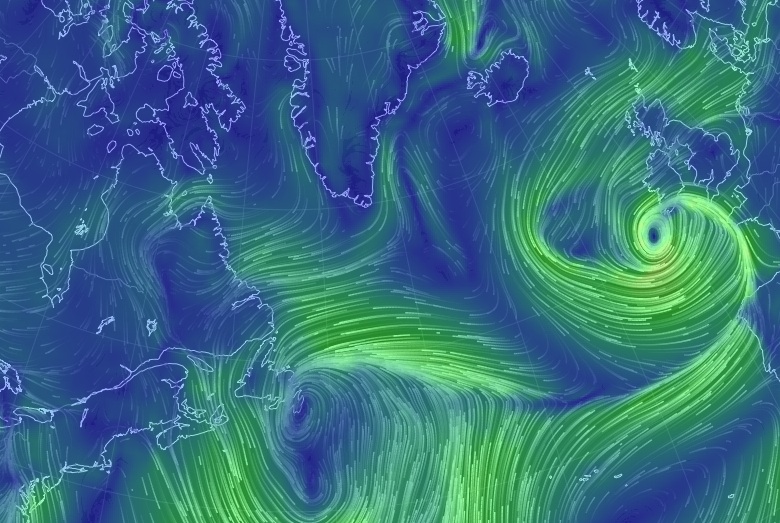
Email chatter between Newfoundland birders the past few days has been about one thing — the winds. They have been lining up nicely across the North Atlantic for several days now – just the way we want to see them in late April. This is THE time for European vagrants to show up on our shores, and a low pressure system churning over the ocean between us and Iceland is a recipe for birds migrating there to get flung in our direction.

One of two Black-tailed Godwits photographed in Renews today. - Photo: Tony Dunne (April 25, 2014)

One of two Black-tailed Godwits photographed in Renews today.
– Photo: Tony Dunne (April 25, 2014)

I was expecting to hear a report of European Golden Plovers (almost annual in Newfoundland) any day now, but was shocked when I opened my email this evening and saw photos of TWO breeding plumaged BLACK-TAILED GODWITS from Renews today (found and photographed by Tony Dunne). This species occurs in Newfoundland every few years, but considering there are two (just the second record of multiple birds) combined with the persistent easterly winds of the past few days … well my excitement level is spiraling! There are likely more birds out there – and more to come since the winds are forecast not only to continue but to improve over the next 72 hours!!

Plenty of European rarities have been recorded here in late April, including Common Redshank, Eurasian Oystercatcher, Garganey and Redwing … and plenty more could be on the menu based on species that are migrating to Iceland right now. We haven’t seen a real “fallout” of European birds since a similar system in late April 1995 brought dozens of European Golden Plover, five Pink-footed Geese, and four Common Redshanks (North America’s first record, with the only subsequent record occurring here four years later). Numerous Northern Wheatear and as many as three “Eurasian” Whimbrel were also recorded during that time. What was missed?!?! Could we be in for another fallout?!?!

STAY TUNED!!!

This map shows the winds as they currently are (Friday evening, April 25) ... looking awesome!!

This map shows the winds as they currently are (Friday evening, April 25) … looking awesome!!

Another map showing the winds forecast for Sunday afternoon -- things only get better!!

Another map showing the winds forecast for Sunday afternoon — things only get better!!

The potential arrival of European Golden Plovers are a much anticipated thing for Newfoundland birders, who keep an eye on the trans-Atlantic weather and and scour fields and barrens along the northeast coast. - Photo: Jared Clarke

The potential arrival of European Golden Plovers are a much anticipated thing for Newfoundland birders, who keep an eye on the trans-Atlantic weather and and scour fields and barrens along the northeast coast.
– Photo: Jared Clarke (May 16, 2010)

These two Black-tailed Godwits, which showed up on the Bonavista peninsula in May 2011, mark the only other record of multiple birds in Newfoundland.  - Photo: Jared Clarke (May 25, 2011)

These two Black-tailed Godwits, which showed up on the Bonavista peninsula in May 2011, mark the only other record of multiple birds in Newfoundland.
– Photo: Jared Clarke (May 25, 2011)


COMMON SHELDUCK !!

News rolled in late this evening that a drake COMMON SHELDUCK had been photographed in Renews earlier today! This duck, which ranges across much of Europe and Asia, is a mega-rarity in North America, and no doubt any Newfoundland birder who can slip away from whatever responsibilities they might have tomorrow will be out looking for it.

This drake COMMON SHELDUCK was discovered this afternoon, feeding along the tidal flats in Renews. It was very wary and flew off when the photogrpher stepped out of his car - hopefully it will be refound!! - Photo: Tony Dunne (April 2, 2014)

This drake COMMON SHELDUCK was discovered this afternoon, feeding along the tidal flats in Renews. It was very wary and flew off when the photogrpher stepped out of his car – hopefully it will be refound!!
– Photo: Yvonne/Tony Dunne (April 2, 2014)

In fact, Common Shelduck has never “officially” been recorded in North America! Although there have been a number of good candidates in the past decade or so, a shadow of uncertainty has always fell over these reports since this classy-looking duck is regularly kept in captivity and the provenance of all individuals spotted in the “wild” is always questioned. However, there is little doubt that this particular bird is wild and will likely mark the first “accepted” record for the ABA region. All the factors line up:

– There are no known sources for an escaped Common Shelduck anywhere even close to nearby.
– In fact, there is a large & growing breeding population of Common Shelduck in Iceland – and that may indeed be closer than any captive birds!
– The timing is perfect, since Common Shelducks should be migrating to Iceland right now. They typically begin arriving there in late March, with the first one this year having been reported on March 12.
– The weather has been right, with strong E/NE winds prevailing the past few days — just what we need for Icelandic migrants to be directed our way. And Renews, on the far east coast of Newfoundland, is the perfect location for one to stop in.


There is one previous record for the province – an individual that was found and photographed in St. John’s on November 17, 2009. Unfortunately it flew off a few minutes later and was never relocated. (NOTE – As discussed above, this record has never been officially considered or recognized by the ABA, although many birders such as myself feel quite strongly that it was most likely a wild bird that strayed during fall migration from breeding grounds in Iceland.)

Photo: Tony Dunne (April 2, 2014)

Photo: Yvonne/Tony Dunne (April 2, 2014)