A Few “birdtherock” Updates …

It’s been a while since I have updated or added any new resources to this website – all the regular excuses apply! So, I’m happy to announce a couple steps in the right direction (even if they are baby-steps).

First, I have updated my unofficial version of the Checklist of the Birds of Newfoundland. I have added two new species recorded in Newfoundland since last summer (Brown Booby and Lazuli Bunting), updated a few species profile pages with new records, and added a few more profiles. I am slowly working on a few more.

- Photo: Darroch Whitaker

– Photo: Darroch Whitaker

Secondly, following a suggestion and a little help from Darroch Whitaker (Parks Canada ecologist & birder extraordinaire), I have added a page about Torngat Mountains National Park. It includes a short blurb, some mouth-watering photos, and a checklist of the park’s birds. Eventually I hope to profile a number of such interesting & exciting places and  create a page of “Places to Go Birding in Newfoundland & Labrador”.

OK — That’s it for now. Were you expecting more?? Just stay tuned 😉

It’s happened — SCISSOR-TAILED FLYCATCHER !!

I was on “daddy duty” this morning, home alone with my two pre-school girls, when I found out that Bruce Mactavish had spotted a “Western Kingbird” flying across the road in Torbay an hour or so earlier. That’s a good bird for Newfoundland (less than annual), and worth looking for. It was cold and windy out, so I knew it might be tough … but the fact that he had also found a “content” Northern Wheatear nearby gave me the motivation to go. Either bird is always nice to see, and the wheatear might cooperate for photos.

The girls headed off to music class with their grandmother at 11:15am, so I took the opportunity to sneak out for an hour or so. As expected, no sign of the “kingbird”, but I readily found the Northern Wheatear in a cemetery where Bruce had described. Light was nice and it was fairly tolerant of me, so I got some nice photos. I spent another 20 minutes looking for the “kingbird”, but no dice. In the meantime, Lancy Cheng joined me in the hunt.

This Northern Wheatear was part of mini-invasion this week - at least seven have been reported on the eastern Avalon. - Photo: Jared Clarke (October 10, 2013)

This Northern Wheatear was part of mini-invasion this week – at least seven have been reported on the eastern Avalon.
– Photo: Jared Clarke (October 10, 2013)

A short while after heading home, I got a text from Lancy that he had seen the “kingbird” near the original location. “Great”, I thought. But I had no car for the next little while and couldn’t go. Oh well …

My mindset changed drastically an hour later (2:30pm) when I got another text saying that Dave Brown had arrived, seen the bird, and re-identified it as a SCISSOR-TAILED FLYCATCHER!! This is a mega mega rarity, having only been recorded once in the province (2001) and far out of reach for birders. And it’s a beautiful bird, to boot!!

This Scissor-tailed Flycatcher was initially misidentified based on a brief glimpse early this morning. Luckily it was refound and identified by Dave Brown - and birders were soon able catch up to it! - Photo: Jared Clarke (October 10, 2013)

This Scissor-tailed Flycatcher was initially misidentified based on a brief glimpse early this morning. Luckily it was refound and identified by Dave Brown – and birders were soon able catch up to it!
– Photo: Jared Clarke (October 10, 2013)

I was in anguish over the next hour while I hung out at home with the girls and made a few frantic phone calls to get the details. At 3:30pm I was jetting over the road, making record time to Torbay where I found a flock of birders staring at a dogberry (aka mountain ash) tree about 75m away. There it was – sitting quietly but in plain view. SCORE!!! I stayed there for the next two hours, watching and taking (mostly distant) photos as the bird moved around the neighbourhood (a neighbourhood that was likely confused and bemused by the dozen or so people who had descended unannounced on their street with scopes, bins, and cameras).

STFL_Oct102013_6323 STFL_Oct102013_6437WHAT A BIRD!!!

Diggin’ … for birds & worms

Thursday, October 3rd was one of those rare days (at least recently) that I could sneak away from home & office obligations to go birding in the middle of the week. When Bruce Mactavish planted the seed in my head, I immediately found a way to make it work. Both the date and the weather were ripe for vagrants – we had just come off some interesting weather that brought four straight days of record high temperatures. I was stoked!

Bruce and I have a good history of finding sweet birds together – so I felt extra good about this day out. It was cool and breezy when Bruce picked me up at 5:45am and we headed south for Bear Cove (site of last week’s Yellow-throated Vireo) and Cape Race (where anything can happen!). We pulled into the gravel pit just after first light, eager to hit the alders and find some gems popping around among the bright fall colours.

But thing started off slow … real slow. Even the Yellow-rumped Warblers that had been so abundant ten days earlier had moved on and we really had to dig to find birds. After several hours of working the tried and true locations between Bear Cove and Cappahayden, we had nothing to show besides a Cliff Swallow, two Palm Warblers, a Magnolia Warbler and a lone Red-eyed Vireo. Slim pickings, for sure …

Even Yellow-rumped Warblers start to become scarce in October.

Even Yellow-rumped Warblers start to become scarce in October.

Things didn’t improve much as we headed south to Cape Race … the road was dead quiet (even the Savannah Sparrows had made a mass exodus), and Long Beach was held no surprises except a Peregrine Falcon that swept through as soon as we arrived. The Baird’s Sandpiper among the flock of more regular shorebirds would have been more notable if it hadn’t been around for the past two weeks. Cape Race itself disappointed with just a handful of sparrows. An unidentified warbler flushed out of the grass was intriguing enough for us to spend an hour traipsing around trying to relocate it, but the strong winds and vast barrens of the headland made for good hiding. An American Kestrel was a minor highlight.

We headed home with a sunken feeling — lots of digging, but no gold.

—–

This evening (October 5) I finally made some time to go look for an immature Yellow-crowned Night Heron that has been hanging out in Torbay for a couple weeks. It was near dusk on a dark, dreary evening – but I had the chance so I took it. After driving around the neighbourhood for 15 minutes, I eventually found it coursing for supper on a lawn. It was very tame, allowing me to park quite close and get some mediocre record shots in very tough light. At least the rain had stopped …

This immature Yellow-crowned Night Heron has been hanging out in Torbay for a couple weeks, While it is pretty much annual in the province, they are usually elusive and this was only my second for the province. - Photo: Jared Clarke (October 5, 2013)

This immature Yellow-crowned Night Heron has been hanging out in Torbay for a couple weeks, While it is pretty much annual in the province, they are usually elusive and this was only my second for the province.
– Photo: Jared Clarke (October 5, 2013)

The heron seems to be doing really well – it was digging, too, but having much more success than Bruce and I had. It came up with several large worms in the fifteen minutes I spent enjoying the hunt.

- Photo: Jared Clarke (October 5, 2013)

– Photo: Jared Clarke (October 5, 2013)

NCC Birding Event – Codroy Valley (Sept 28, 2013)

The Nature Conservancy of Canada is a wonderful organization that protects many areas of natural diversity across the nation – including here in Newfoundland & Labrador (where it has already protected more than 12,000 acres of important bird/wildlife habitat). They are leading environmental stewards and preserve beautiful tracts of land/wetlands for both the plants & animals that depend on it and for the enjoyment of people for generations to come. Additionally, they hold fun and educational events — one of which is happening THIS weekend in our very own Codroy Valley. Check it out!!

Date: Saturday September 28, 2013
Location: Upper Ferry, NL
Meeting Time: 1:00 pm at the Wetland Interpretation Centre
Special Features: Expert birding event, opportunity to speak with biologists conducting banding in the area
Sign-up Deadline: Friday September 27, 2013
Description: Help NCC survey for waterfowl in the Codroy Valley, one of the most productive of Newfoundland’s few estuarine wetland sites. The Codroy Valley is the only Ramsar Wetland of International Importance in the Province, is a recognized Important Bird Area for migratory birds, including shorebirds and ducks, and is a site where raptors and spring vagrants are commonly found.

Learn more and/or register HERE.

Yellow-throated Vireo … and the Fall “Big Day”

It felt like Christmas when I woke up on Saturday, September 21.

This was the day of the 21st Annual BMI  (Blake Maybank Invitational) – one of my favourite days of the year!! The event was originally named in honour of the man who started the tradition by inviting local birders out on Thanksgiving weekend and, while it no longer has anything to do with Blake (who now lives and birds in Nova Scotia) and isn’t always held on Thanksgiving, the name has stuck. The event sees teams of birders spread out over the Avalon peninsula to try and see as many species as possible, especially the rare ones!! (Think of it like a big Christmas Bird Count, but with a bigger focus on finding rarities than counting).

It felt like Christmas in another way, too — the temperature was hovering just above freezing as I carried my gear to the car and set out. It had been a cold, clear night with light northerly winds – raising the distinct possibility that many of the birds we had been hoping to find may have caught the breeze south and out of Newfoundland. But whatever the day might bring, it was going to be great one for being out and enjoying it.

I picked up my buddy and “teammate” Dave Brown, stopped for the obligatory coffee and breakfast sandwich, and headed south along the east coast to Renews. It was light when we got there at 7:00am, with the low sun sparking on the first frost of the year. We started birding in some of the alder-lined gravel pits north of Renews – such “pits” are well known for attracting and holding migrants (both local and wayward) during fall. At first we saw mostly sparrows (Swamp, Savannah, and White-throated), but 30 minutes and two stops later the activity levels exploded. Yellow-rumped Warblers were popping up all over the pace, with double digits at most stops. Among the dozens of Yellow-rumpeds we also found a few other “local” warblers – Blackpoll, Wilson’s, Yellow, Palm and Common Yellowthroat. A Tennessee Warbler was our first little taste of something that doesn’t usually occur on the Avalon (although they breed commonly in other parts of the island and Labrador).

While the activity remained high as we worked our way south to Renews, the variety was low. Everything we were seeing could be considered “local” species, and the big number of Yellow-rumped Warblers indicated that they were gathering on the southeast coast in preparation for a mass exodus. How many birds had left ahead of them during the north winds of the past 24 hours?? We stopped only briefly at Renews since the tide was high and another “team” was expected to cover it later in the day. A flock of 13 Northern Flickers was an odd spectacle, with eight on a single dead tree. At the beach, I only saw two Yellowlegs (one Greater, one Lesser), and we heard one Lapland Longspur flying over. It would be the only one of the day.

Activity remained high as we approached Bear Cove – a well known “migrant trap” that we bird on a regular basis. A recent program to clear all the roadside alders in that area has changed the landscape, but fortunately (and somewhat to our surprise) birds still seem to gather there. While Dave birded his way down the hill descending into Bear Cove itself, I headed to the area of a large gravel pit that was still home to lots of alders. Just metres from the car, a bright bird popped out of the trees. I knew it was going to be good, but struggled to get a clear look. Then it crept into the open — YELLOW-THROATED VIREO!!!

This stunning Yellow-throated Vireo was the big highlight of this year's BMI birding. It is quite rare in Newfoundland, with maybe a dozen or so records. Photo: Jared Clarke (Bear Cove, September 21, 2013)

This stunning Yellow-throated Vireo was the big highlight of this year’s BMI birding. It is quite rare in Newfoundland, with maybe a dozen or so records.
Photo: Jared Clarke (Bear Cove, September 21, 2013)

This very dull Dickcissel was another good bird, especially for this date. It was found just metres from the vireo. Photo: Jared Clarke (Bear Cove, September 21, 2013)

This very dull Dickcissel was another good bird, especially for this date. It was found just metres from the vireo.
Photo: Jared Clarke (Bear Cove, September 21, 2013)

I yelled out to Dave, but he was too far up the road to hear me. I ran for the camera, but the vireo had disappeared in the 30 seconds I was gone. But more birds were moving through, and I soon picked out a very dull Dickcissel low down in the vegetation. I snapped a few photos as Dave was cresting the hill – he had found a Bobolink (the first of at least two we would see during the day). Together we worked the area where I had seen the vireo. A few minutes later we heard a grating chatter reminiscent of an oriole — that was IT! We soon got on the bird again – this time Dave got great looks, and I got some distant record shots. We also found a WARBLING VIREO – another great bird for Newfoundland, although pretty much annual and far less exciting. Through the next hour of working south through Bear Cove and Cappahayden we found two more Warbling Vireos, a Blue-headed Vireo, and another Bobolink. Bear Cove beach had the regular assortment of shorebirds, including several dozen Semipalmated Plover and Semipalmated Sandpiper, four Dunlin, three Sanderling, two White-rumped Sandpipers and one Ruddy Turnstone. Lone Black and Surf Scoters loafed on the water just offshore.

This adult male Blue Grosbeak was among the best birds seen all day, although it had been present for a few days so lacked the "exciting discovery" factor  ;)  However, we rarely see them in this plumage. Photo: Jared Clarke (Cape Race, September 21, 2013)

This adult male Blue Grosbeak was among the best birds seen all day, although it had been present for a few days so lacked the “exciting discovery” factor 😉 However, we rarely see them in this plumage.
Photo: Jared Clarke (Cape Race, September 21, 2013)

The activity had petered out by noon, so we finished covering “our” area and headed further afield to Cape Race (where another “team” had started at first light). It was very quiet along the road, and we later learned it had been so all day. At the lighthouse we saw a brilliant adult male BLUE GROSBEAK – an exciting bird but it had been present and known for several days, so not a surprise. We also saw two LARK SPARROWS at the lighthouse and yet another at nearby Long Beach – an unprecedented total for that species. Along the way home we picked up a Baltimore Oriole for the day, and Dave flushed another (probable) Bobolink. And while I was watching the small flock of shorebirds at Long Beach, a Merlin swooped in and grabbed a Semipalmated Plover just metres in front of me — if only I had been a bit more ready with the camera!

LASP_Sept21_5202

I narrowly missed an awesome (albeit brutal) photo opportunity when this Merlin snagged a plover just metres in front of me -- this is the best I could muster. Photo: Jared Clarke (September 21, 2013)

I narrowly missed an awesome (albeit brutal) photo opportunity when this Merlin snagged a plover just metres in front of me — this is the best I could muster.
Photo: Jared Clarke (September 21, 2013)

Perhaps the most interesting thing (for me, at least) was a school of Bluefin Tuna leaping out of the water just off the cape, surrounded by dozens of Northern Gannets and gulls and several whales (Minke and Humpback). Those Tuna were a “lifer” and very cool to see in action!!

We finished the day with an impressive 75 species, including the best bird of the day! Back at Bruce Mactavish’s house for chili and “refreshments”, we compiled the grand list — overall, the day had produced an excellent 118 species, including two that were new for the BMI (Yellow-throated Vireo & Northern Mockingbird). Other good birds (not seen by us) included a Northern Wheatear, Yellow-billed Cuckoo, Pied-billed Grebe, Baird’s & Buff-breasted Sandpipers, Blackburnian Warbler and an unidentified empidonax flycatcher. Over the past 21 years, a staggering 223 species have been recorded on this event!

Not bad for a day’s birding!

Savannah Sparrows were plentiful along the Cape Race road ... their peak out-migration is still a couple weeks away. Photo: Jared Clarke (September 21, 2013)

Savannah Sparrows were plentiful along the Cape Race road … their peak out-migration is still a couple weeks away.
Photo: Jared Clarke (September 21, 2013)

LAZULI BUNTING ??!?!?

There have been several big-time, but “ungettable”, rarities reported the past few days – a Brown Booby on the Grand Banks and a late report of a Lewis’s Woodpecker in Labrador!! Still, I was stunned when I received a text message from my friend Chris Ryan this morning asking me about a LAZULI BUNTING just reported on the newsgroup! WHAT?!?!

Bruce Rodriguez, who works with the Division of Wildlife and has bird experience from across the country, reported seeing an adult male Lazuli Bunting in his Corner Brook yard this morning – however it flew off before he could get a “decent” photo. I immediately emailed him …  the  description he sent me was compelling, but I had to wait for him to send me a couple photos he described as “dark” and “just a blur”. When he did, a lightened version of his dark photo (below) showed a bird that almost certainly is a LAZULI BUNTING!!!

This apparent adult male LAZULI BUNTING was photographed in Corner Brook this morning - if confirmed (and this photo pretty much does that), it would mark the first record of this western species for Newfoundland & Labrador!! WOW!!!

This apparent adult male LAZULI BUNTING was photographed in Corner Brook this morning – if confirmed (and this photo pretty much does that), it would mark the first record of this western species for Newfoundland & Labrador!! WOW!!!
– Photo: Bruce Rodriguez (September 10, 2013)

Lazuli Buntings occur across the western half of the United States and the southernmost regions of British Columbia, Alberta and Manitoba; wintering primarily in western Mexico. While not completely unprecedented in the northeast, it is a major league rarity in these parts and the first for Newfoundland & Labrador.

Bruce watched in futility as the bird flew out of his yard, moved through several neighbour’s properties and eventually out of sight. Hopefully it will return … Bruce is stocking his feeders as I write this! Personally, I’m stranded in St. John’s with family obligations the next few days, but with a rarity like this I’ll be aching to go chase it the first chance I get!!

Off the Rock: Birding New Brunswick

I recently returned from New Brunswick, where I co-led an Eagle Eye tour with crack birder Jody Allair (August 17-26). We had an excellent group of nine people from British Columbia, Ontario, Vermont and Virginia; awesome weather from start to finish; and a whole pile of amazing experiences surrounded by wonderful birds and scenery.

The tour started in Saint John and took us through beautiful Fundy National Park, where we enjoyed lush boreal forests and birds like Common Loon, Winter Wren, Boreal Chickadee, Red-breasted Nuthcatch, and Blackburnian Warbler. We also heard the intriguing song of Nelson’s Sparrows at a nearby saltmarsh and watched as thousands of shorebirds foraged on the famous Bay of Fundy mudflats at Mary’s Point.

Tens of thousands of Semipalmated Sandpipers were roosting at Johnson Mills at high tide. An estimated three-quarters of the world's population of this small shorebird stop over at the Bay of Fundy during southward migration every year.

Tens of thousands of Semipalmated Sandpipers were roosting at Johnson Mills at high tide. An estimated three-quarters of the world’s population of this small shorebird stop over at the Bay of Fundy during southward migration every year.

However, the real shorebird spectacle took place the next morning when we visited Johnson Mills. Huge flocks of Black-bellied Plover and smaller shorebirds were frantically feeding as the waters rushed in, and then an incredible 60,000+ Semipalmated Sandpipers roosted in one tight flock on a small stretch of exposed beach at high tide. There is no way to describe the sight of a beach completely covered in birds – no sand or rocks visible between them; nor of the amazing maneuvers somehow carried out in unison as tens of thousands of birds zig-zag through the air and above the rolling water!!

From there we visited the phenomenal Sackville Waterfowl Park, where we enjoyed dozens of larger shorebirds such as Greater & Lesser Yellowlegs, Short-billed Dowitchers and Wilson’s Snipe. A normally very secretive Sora even graced us by walking out of the dense vegetation right in front of us!

Talk about close quarters! No

Talk about close quarters! No “personal space” in this crowd.

Two days were spent exploring New Brunswick’s fabulous north shore – including the quaint Acadian town of Bouctouche and the rich forests, bogs and beaches of Kouchibouguac National Park. Excellent birds such as Willet, Ruddy Turnstone and Semipalmated Plover graced the sandy shorelines, while hundreds of Common Terns wheeled around just offshore. Two Gray Jays dropped in to say hello, while a family of Palm Warblers offered great views on the edge of a spruce bog. A real surprise, several Red Crossbills were heard flying over – and one even allowed everyone in the group a fantastic look as it fed among the treetops. Eastern Kingbirds and Common Nighthawks even entertained as we ate incredible evening meals at our historic bed and breakfast. The next morning we enjoyed a very birdy walk along a quiet river trail, enjoying a variety of birds that included Hooded Merganser, Magnolia & Tennessee Warblers, Northern Parula, American Redstart and Brown Creeper  – all before heading back to Saint John for the evening.

GRYE_log_3396The next stage of our tour took us to beautiful Grand Manan Island, an ocean playground nestled away in the Bay of Fundy. An overnight cold front and light northerly winds brought us our first real taste of songbird migration. Fifteen species of warbler were found at various locations, including the northern tip of the island and the wonderful property of the very hotel in which we stayed. Eastern Phoebes darted around, a Black-billed Cuckoo sang for us, and a pair of Northern Cardinals called out from the treetops. An evening seawatch at Long Eddie Point (“The Whistle”) scored us hundreds of Sooty and Great Shearwaters along with several Manx Shearwater, while a stunning Broad-winged Hawk soared overhead.

Great Shearwater was definite highlight of our boat trip off the SE coast of Grand Manan Island.

Great Shearwater was definite highlight of our boat trip off the SE coast of Grand Manan Island.

But the real seabird show took place during a pelagic whale-watching expedition between Grand Manan and White Head Islands — Shearwaters swarmed all around the boat, thousands of Phalaropes (Red and Red-necked) fluttered past, and Wilson’s Storm Petrels coasted by. We also scored several Great Cormorants – a tough species and major target for several members of our group. (Whales? Yes – they were there too. A dozen Humpbacks Whales, several Fin Whales and a group of White-sided Dolphins all put on an amazing show that successfully distracted us from the birds far too much of the time!)

Despite our best efforts to stay focused on birds, the whales sometimes stole the show.

Despite our best efforts to stay focused on birds, the whales sometimes stole the show.

GMIferry_Swallowtail_4174

The Grand Manan ferry offers up some excellent birding opportunities!

The ferry ride back to mainland New Brunswick was incredibly smooth and resulted in some excellent birding – Razorbills, Atlantic Puffins and our only Common Murre of the trip floated by at close range, an Arctic Tern sat cooperatively on a floating log, and a Basking Shark appeared on the surface just long enough to tease Jody and me. Harbour Porpoises were everywhere we looked.

Chumming_3728

Our final birding stop at Irving Nature Park in Saint John netted us a Northern Harrier, several Merlins and the Peregrine Falcon that had been so elusive all week — chasing thousands of shorebirds over the beach and water’s edge. A small flock of Surf Scoters was our last new bird — bringing our tally up to an incredible 137 species!! What an amazing trip!!

A few of the places we visited & things we saw:

BouctoucheTrail_3512

Bouctouche – a beautiful example of Acadian culture and scenery!

Find the plover  ;)

Find the plover 😉

Kelly’s Beach, Kouchibouguac National Park

CastaliaMarsh_3516

Castalia Marsh, Grand Manan

We also saw a good number of butterflies – including new ones for me, like this Eastern Tailed Blue. Beauty!

North Harbour, Grand Manan (with a herring weir in the foreground)

MarathonInn_3846

Marathon Inn, Grand Manan

An Eastern Phoebe hanging out on the clothesline.
(See what I did there? “Hanging out … clothesline”? Eh?)

North Harbour, Grand Manan

Common Wood Nymph – another classy butterfly.

Dulse – both a delicacy and a way of life on Grand Manan!

Lots of fin slapping …

Swallowtail Light, Grand Manan

Swallowtail Light, Grand Manan

Sunset at Long Eddie Point (“The Whistle”), Grand Manan

“Bye” for now …
(OK – I admit that’s even cheesier than the clothesline thing!)

Checking in from New Brunswick …

Despite the lack of updates recently, I’ve been busy birding. In fact, maybe that’s why I haven’t been updating the blog 😉

Jody Allair (of Bird Studies Canada fame) and I have been co-leading an exciting bird tour in New Brunswick for the past week … just two more days left, and we’ve been burning it up with 126 species of birds! Check out some of the highlights at Jody’s Twitter feed (@JodyAllair).

I’ll post a summary of the tour next week.

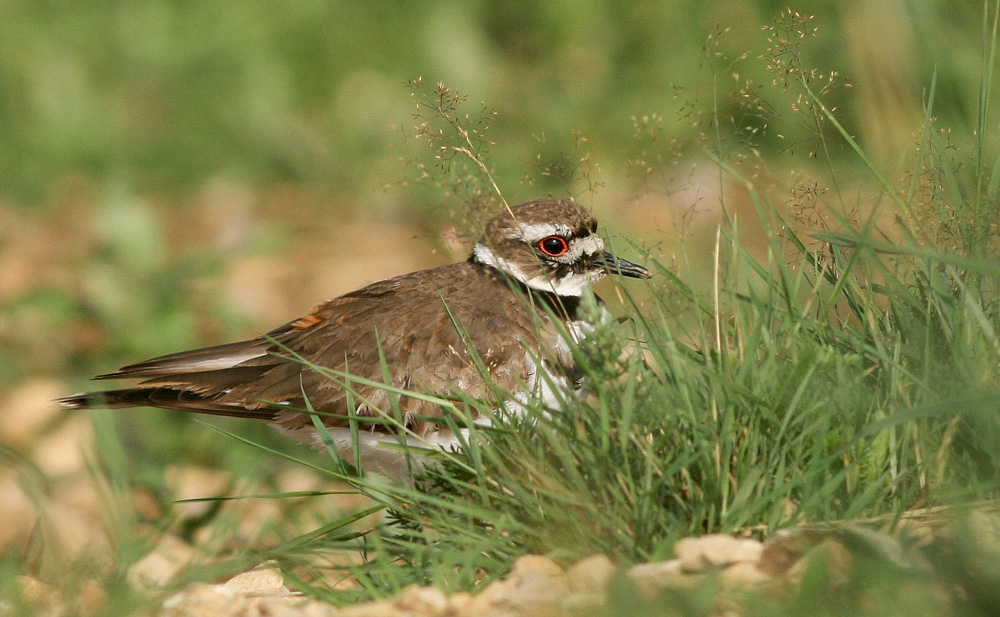
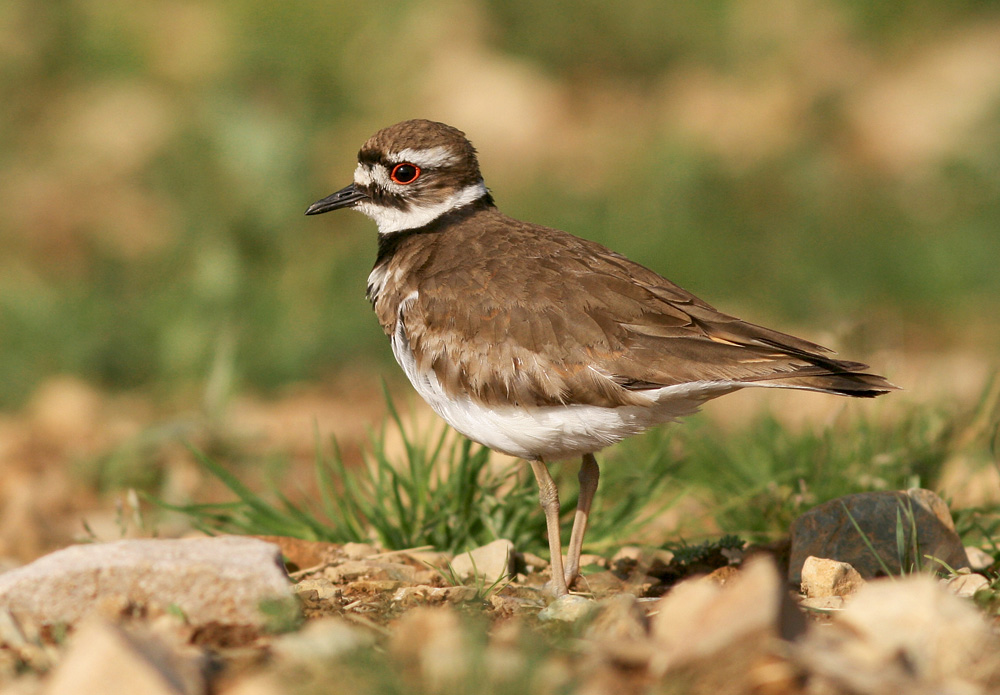
“Killing time” … with a Killdeer

My sister had been telling me recently about a Killdeer family hanging out near the barn in Logy Bay where she keeps her horse. Figuring it was a good opportunity to photograph one of these fun shorebirds, I tagged along as she went to take care of her stable chores a couple weekends ago. Sure enough, one of the adults was hanging out in the field just behind the barn, and the young ones (no longer downy) were grazing not far away. I set myself up on the ground in the corner of the field where they were, hoping they might get used to me and wander over. After an hour or so (with plenty of mediocre photos in the meantime), the adult was walking and standing within metres of me. The light was harsh but once she got at the right angle and away from the taller grass, it was magic. The young ones had disappeared over the crest of a small hill, but no complaints. It’s not every day I get to spend quality time with such a classy bird (even if she did look a little ratty after weeks of raising a family!).

Thanks, sis.

KILL_July20_0567 KILL_July20_0787 KILL_July20_1067 KILL_July20_1115

Newfoundland Orchids

Since cluing up the two bird & nature tours last month, I’ve been taking a bit of time to do some family stuff and make some progress on some contract work with the university. Not much birding. However, those tours did reawaken my interest in wildflowers – something I haven’t taken as seriously as birds in the past, but always found very interesting. I stole a couple hours earlier this week and went to a local hotspot for orchids, where I found seven species in various stages of bloom.

So, here’s a whole post NOT devoted to birds. Instead, I’ll share a few photos of some orchids taken in Newfoundland over the past few summers. There are about three dozen species of orchids found across Newfoundland – some common, some very rare. I’ve included fourteen below, plus a hybrid.

The Bog Candle (Platanthera dilatata; left) is a common white orchid that grows in bogs and wetlands across the island. Hooded Lady's-tresses (Spiranthes romanzoffiana; right) are unique among Newfoundland orchids due to their tight, spiraling flowers. It also exudes an almond-like aroma.

The Bog Candle (Platanthera dilatata; left) is a common white orchid that grows in bogs and wetlands across the island. Hooded Lady’s-tresses (Spiranthes romanzoffiana; right) are unique among Newfoundland orchids due to their tight, spiraling flowers. It also exudes an almond-like aroma.

Ragged Fringed Orchid (Platanthera lacera) is an uncommon orchid that occurs throughout much of Newfoundland. Its greenish-white flowers have a more ragged fringe than its relatives below.

Ragged Fringed Orchid (Platanthera lacera) is an uncommon orchid that occurs throughout much of Newfoundland. Its greenish-white flowers have a more ragged fringe than its relatives below.

Purple Fringed Orchid (Platanthera psycodes) is a beautiful flower that growd in wet meadows and bogs. "Andrew's Orchid" (Platanthera x andrewsii) is a stunning hybrid between Purple-fringed and Ragged Fringed Orchids.

Purple Fringed Orchid (Platanthera psycodes; left) is a beautiful flower that grows in wet meadows and bogs. “Andrew’s Orchid” (Platanthera x andrewsii; right) is a stunning hybrid between Purple-fringed and Ragged Fringed Orchids.

White Fringed Orchid (Platanthera blephariglottis) is locally common, while Marsh Leopard Orchid (Dactylorhiza majalis) is found only in a few select locations around St. John's.

White Fringed Orchid (Platanthera blephariglottis; left) is locally common, while Marsh Leopard Orchid (Dactylorhiza majalis; right) is found only in a few select locations around St. John’s.

A small, understated flower, the Clubspur Orchid (Platanthera clavellata) is common across most of the island.

A small, understated flower, the Clubspur Orchid (Platanthera clavellata) is common across most of the island.

The beautiful Dragon's Mouth Orchid (Arethusa bulbosa) occurs in a range of colours from the common pink form (left) to the much more uncommon white form (right).

The beautiful Dragon’s Mouth Orchid (Arethusa bulbosa) occurs in a range of colours from the common pink form (left) to the much more uncommon white form (right).

Both Grasspink (Calopogon tuberosus) and Rose Pogonia (Pogonia ophioglossoides) can be found across most of Newfoundland, though not typically on the Great Northern Peninsula.

Both Grasspink (Calopogon tuberosus) and Rose Pogonia (Pogonia ophioglossoides) can be found across most of Newfoundland, though not typically on the Great Northern Peninsula.

 Pink Lady Slippers (Cypripedium acaule; right) are among the most well known orchids, growing among low shrubs and clearings woods across the island. Showy Lady Slippers (Cypripedium reginae; left) is much less common, bordering on rare. This one was growing near Lomond in Gros Morne National Park.

Pink Lady Slippers (Cypripedium acaule; right) are among the most well known orchids, growing among low shrubs, clearings and open woods across the island. Showy Lady Slippers (Cypripedium reginae; left) is much less common, bordering on rare. This one was growing near Lomond in Gros Morne National Park.

Tall Northern Green Orchid (Platanthera huronensis) is a locally common orchid on the Great Northern Peninsula. Its dense, greenish-white flowers grow in large spikes, making it quite noticeable where it occurs.

Tall Northern Green Orchid (Platanthera huronensis) is a locally common orchid on the Great Northern Peninsula. Its dense, greenish-white flowers grow in large spikes, making it quite noticeable where it occurs.

A very tiny orchid, Green Adder's Mouth Orchid (Malaxia unifolia) is easily overlooked. It is relatively rare even where it occurs, including on the Avalon Peninsula where these were photographed.

A very tiny orchid, Green Adder’s Mouth Orchid (Malaxia unifolia) is easily overlooked. It is relatively rare even where it occurs, including on the Avalon Peninsula where these were photographed.

You can find more orchid and wildflower photos on my Flickr age.

OK – I promise the next post will include some birds. Honest.